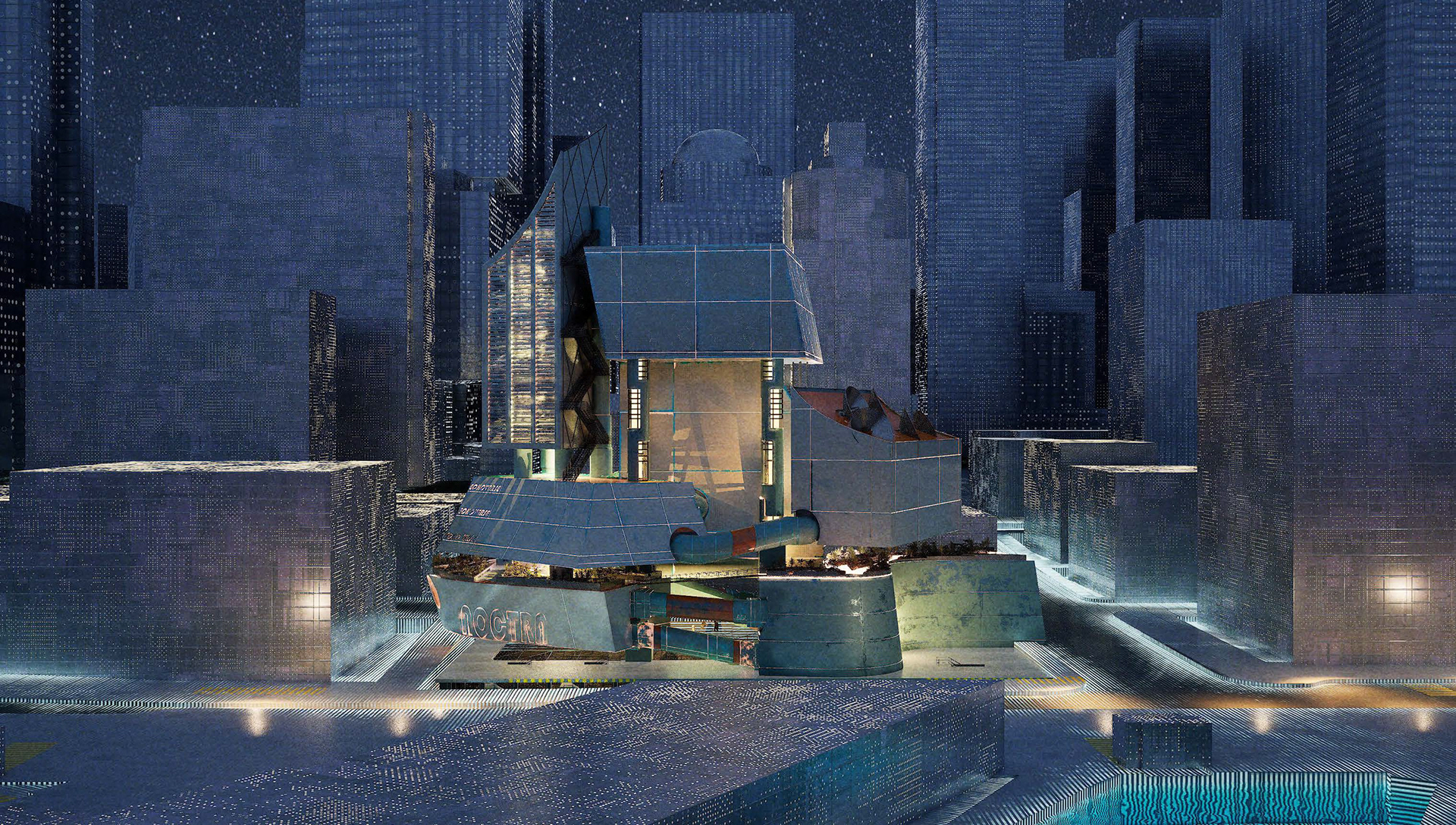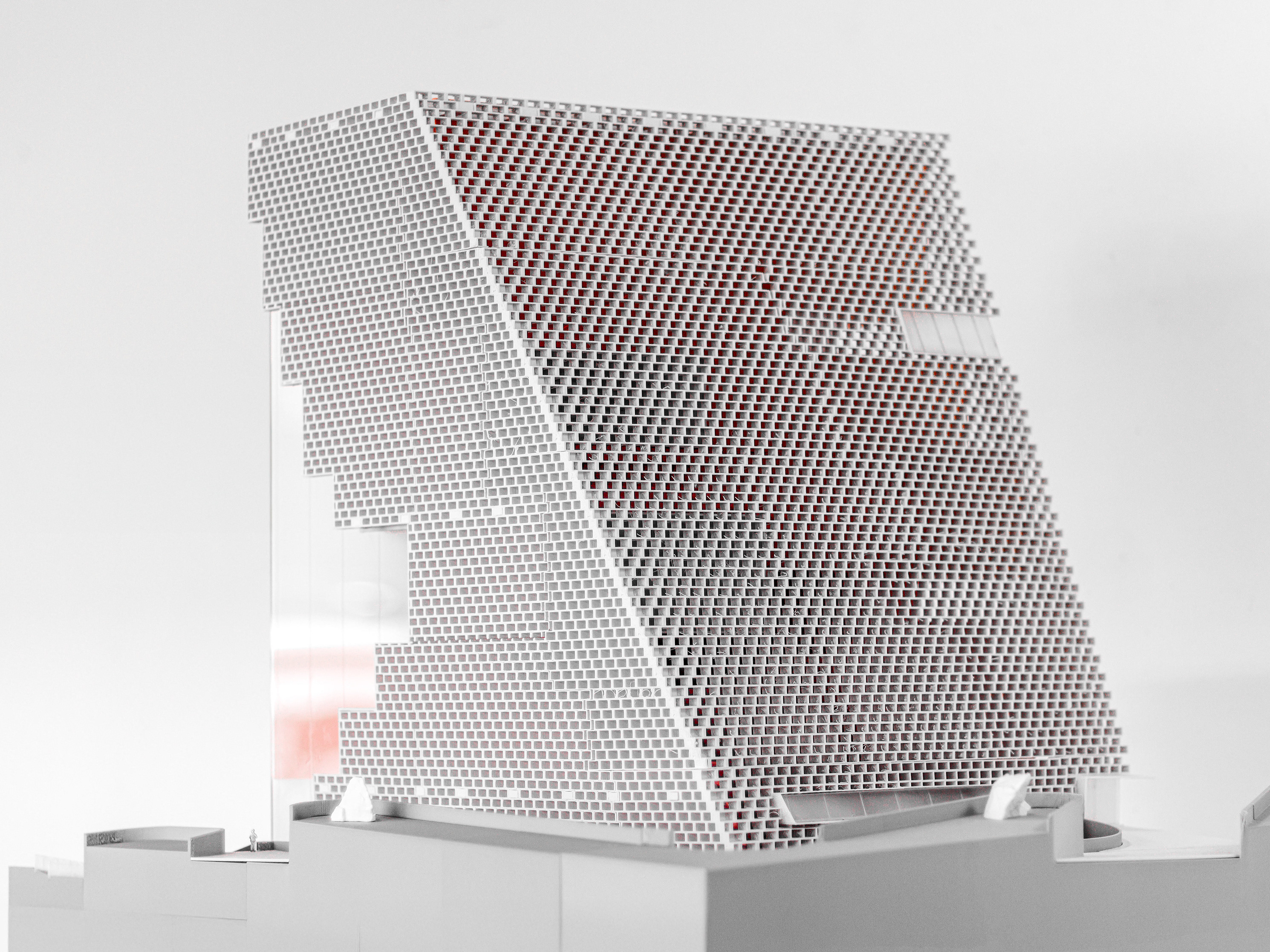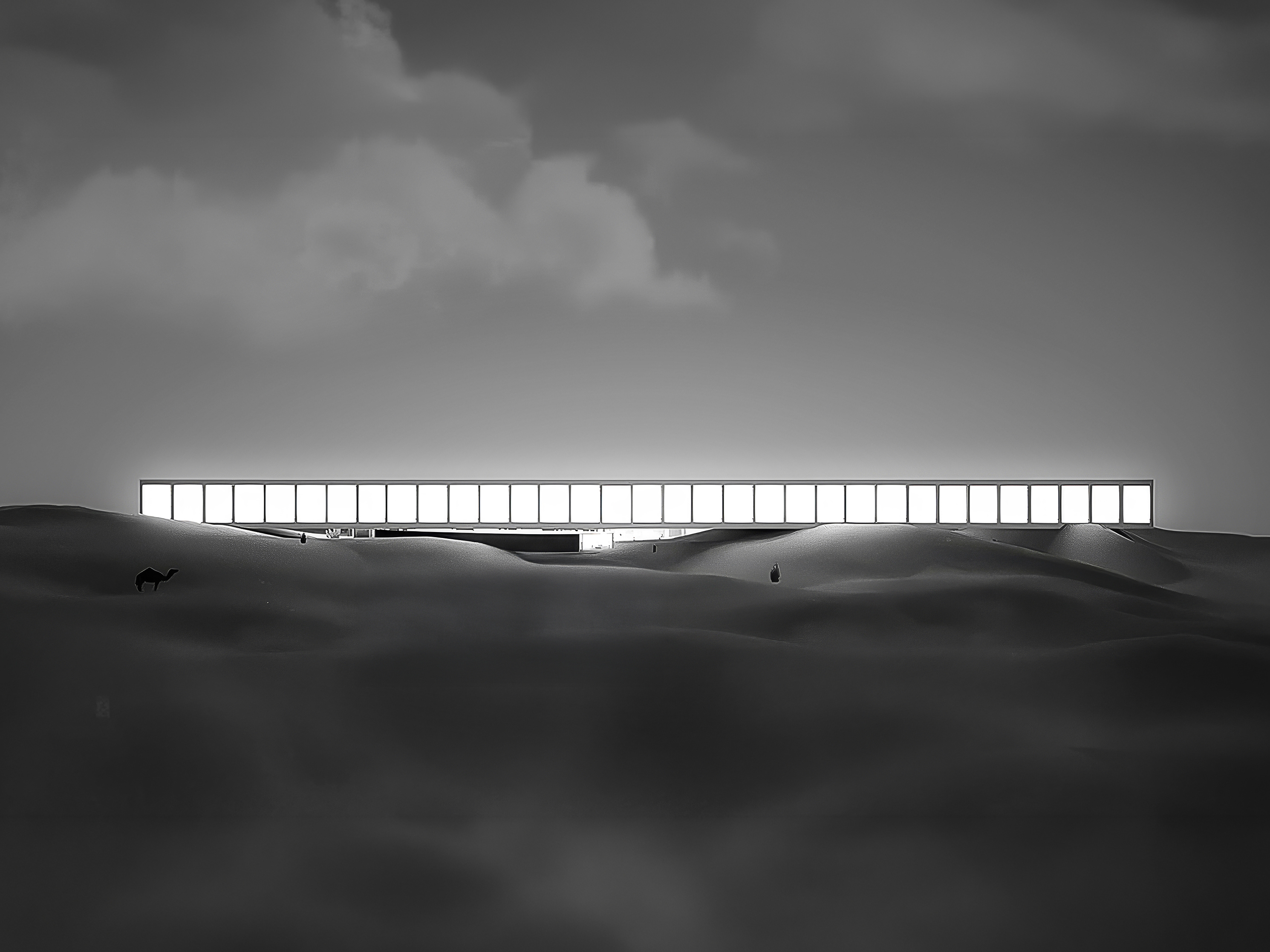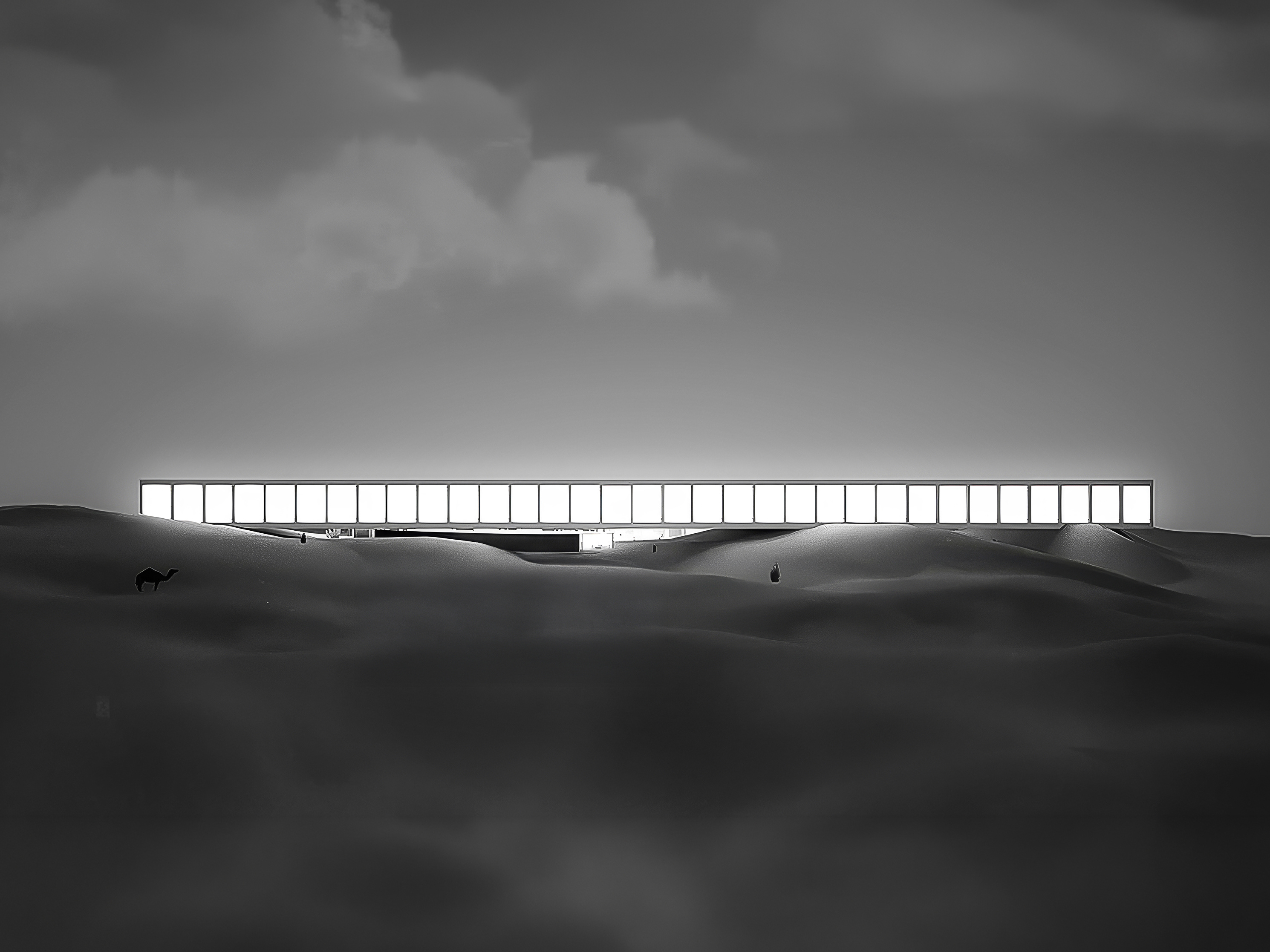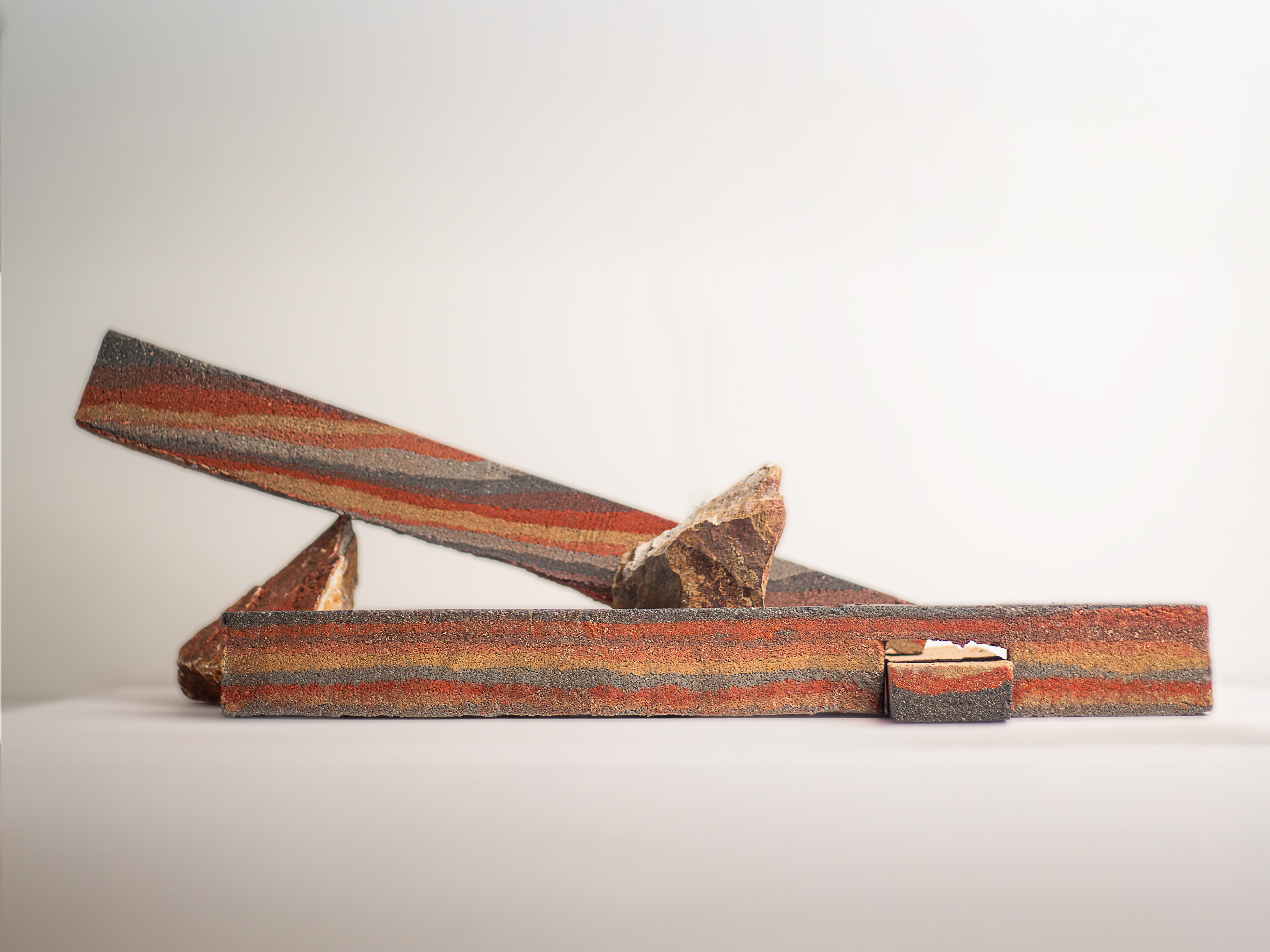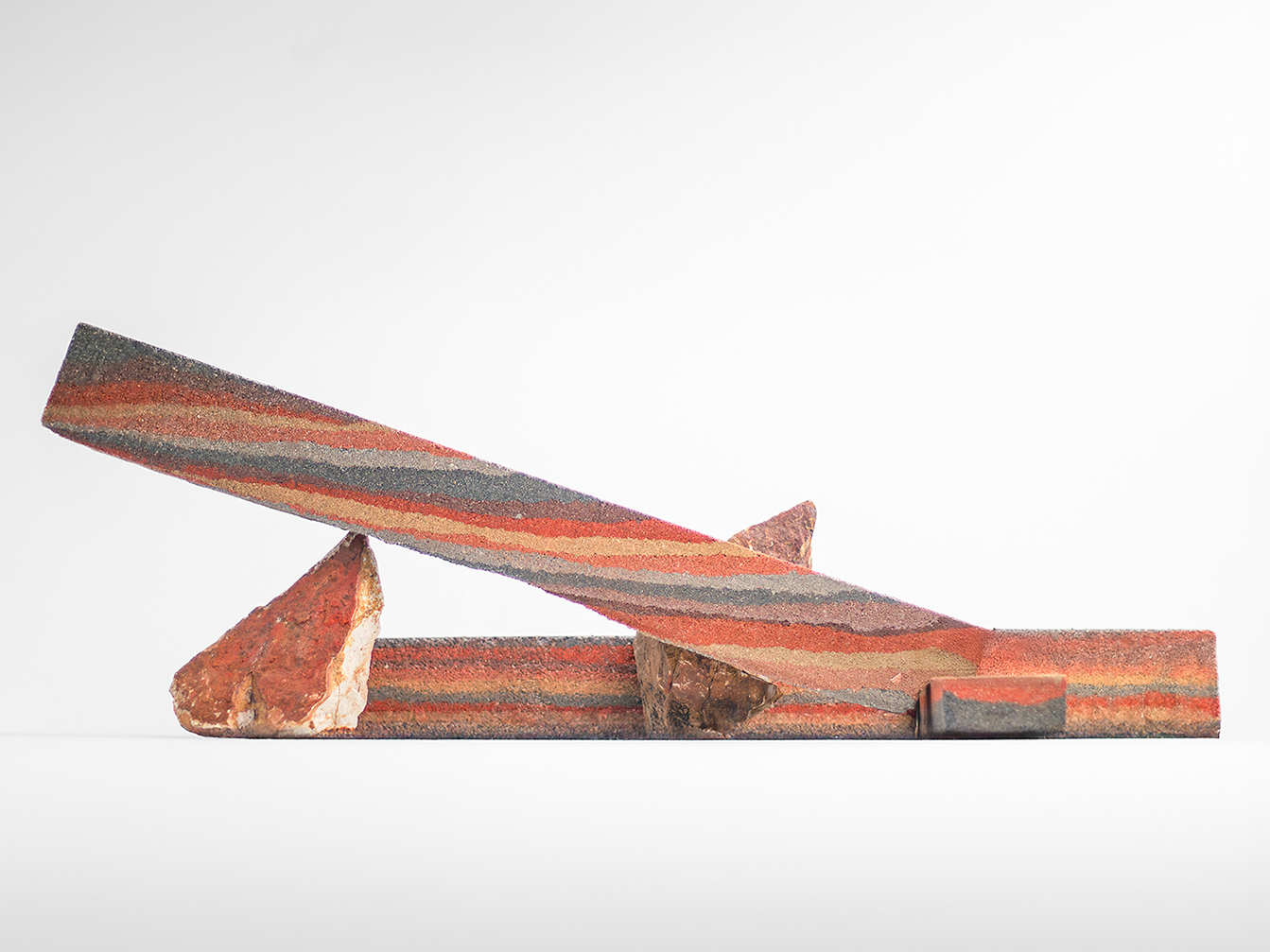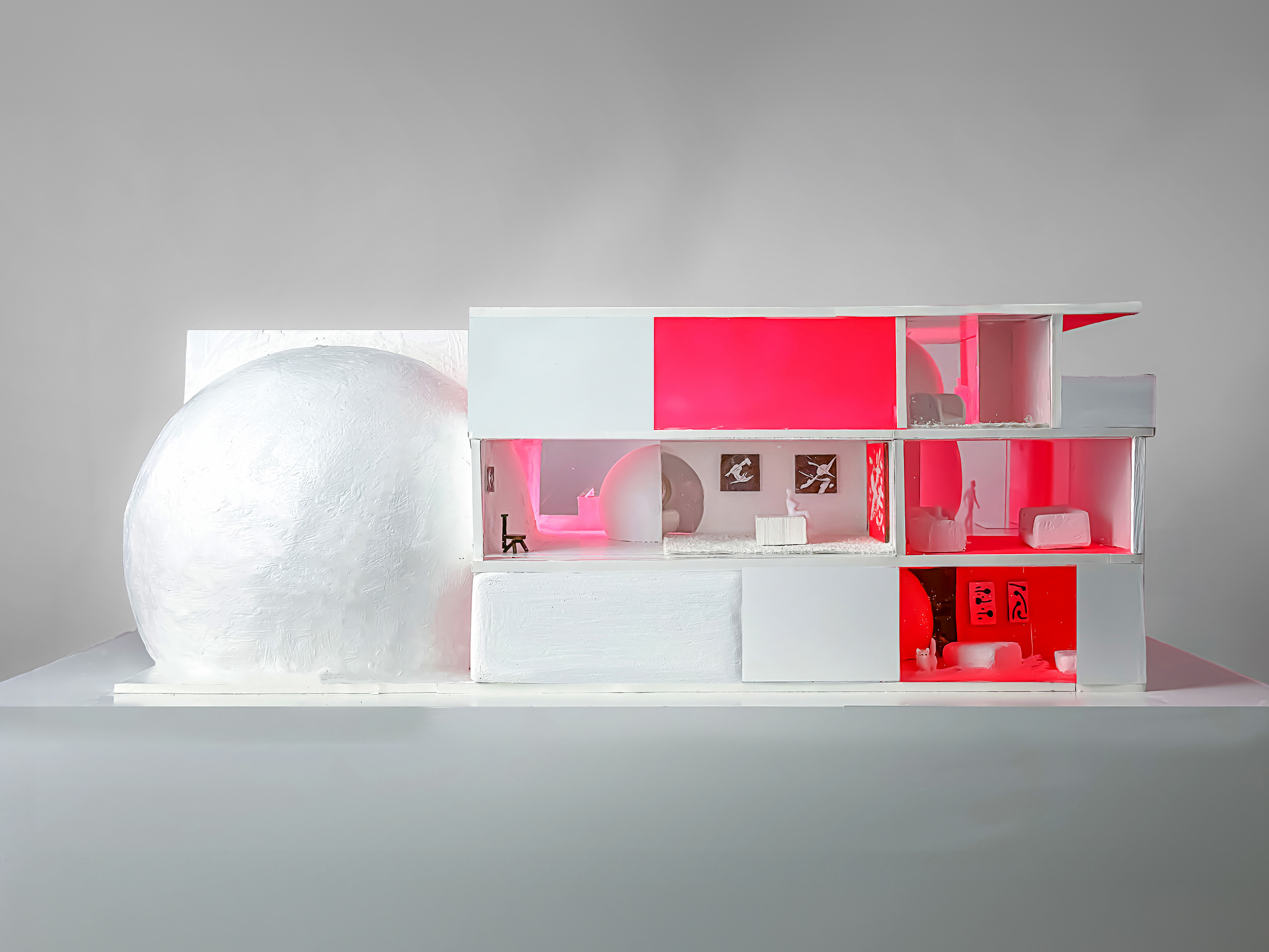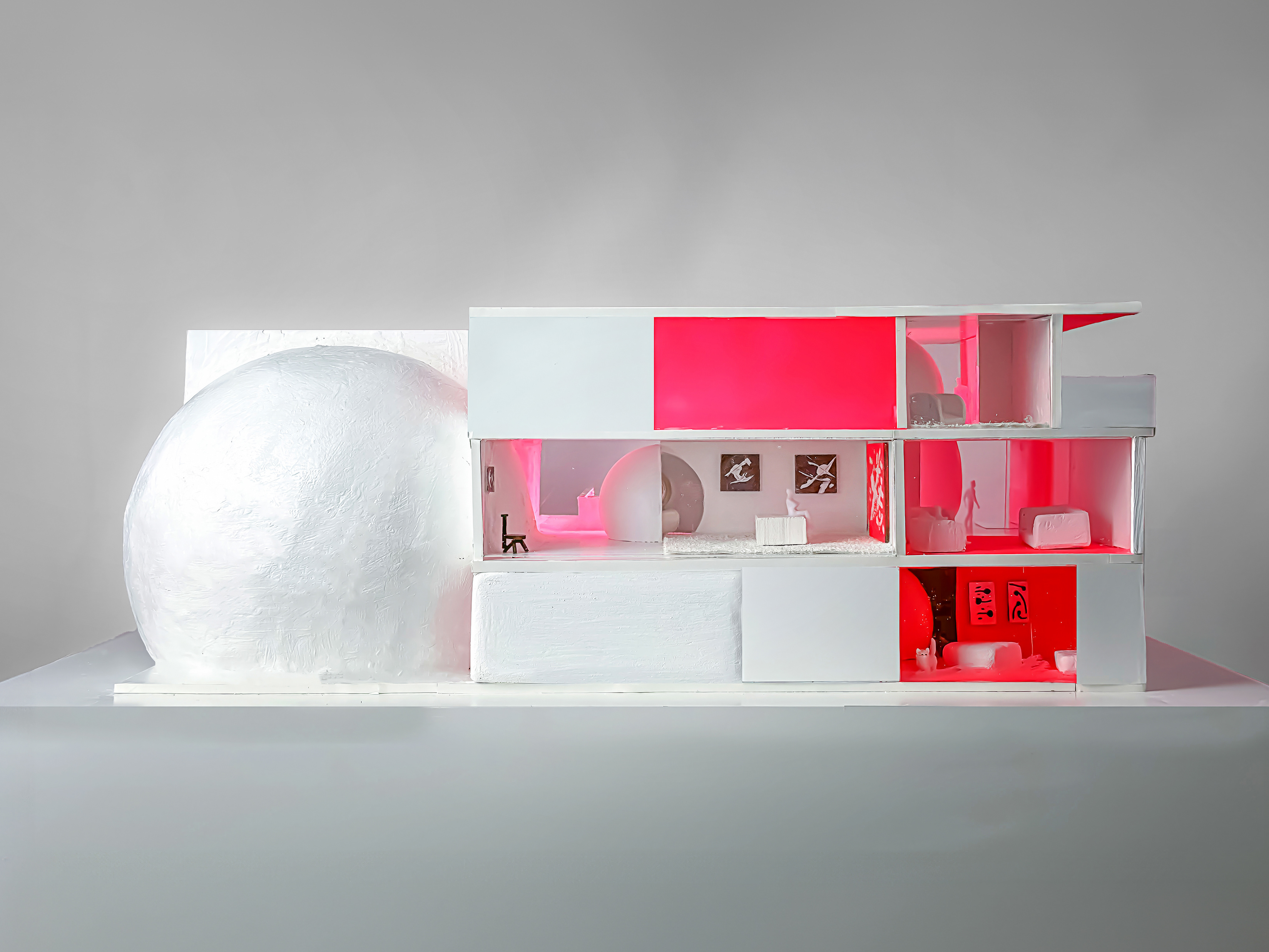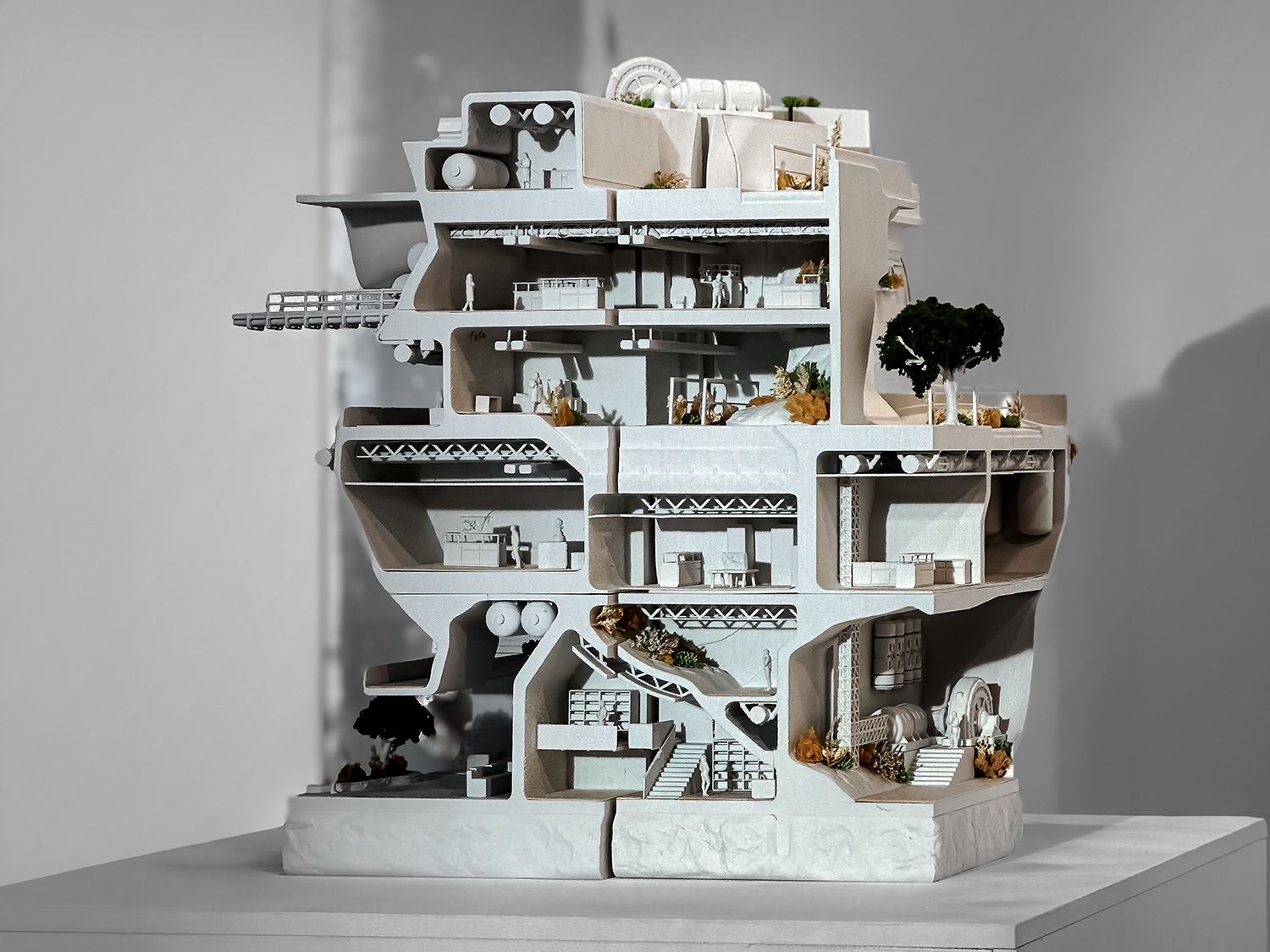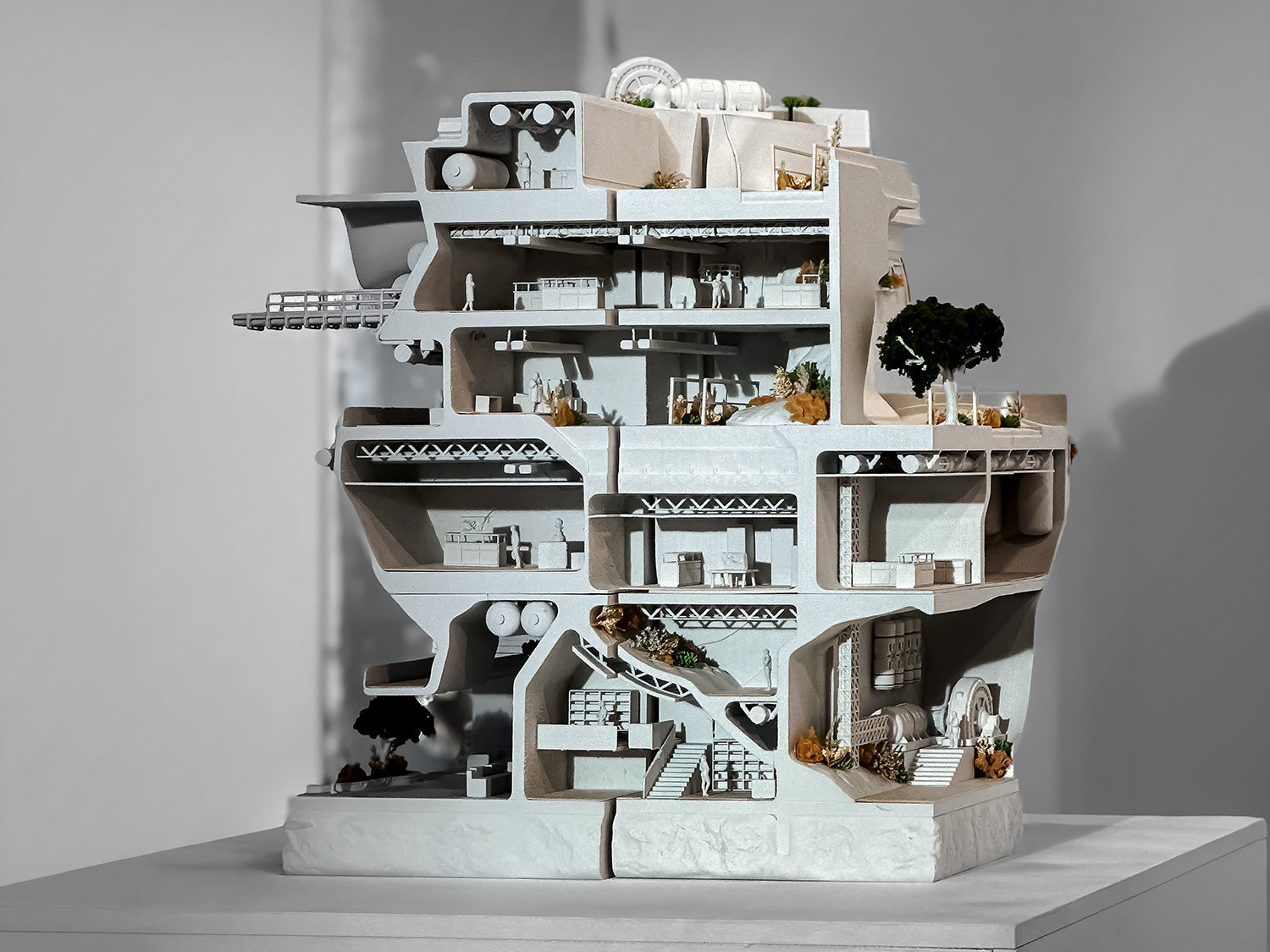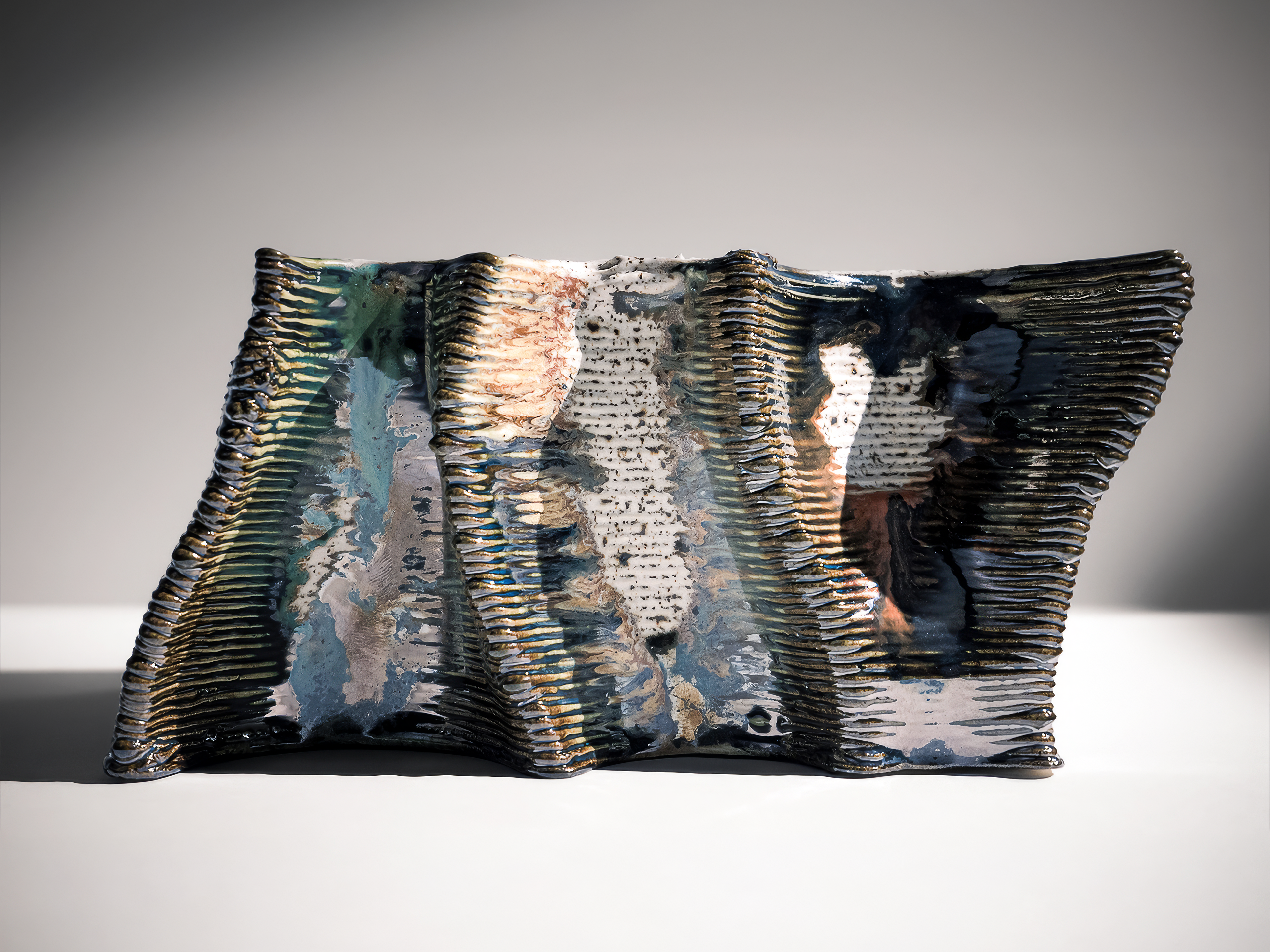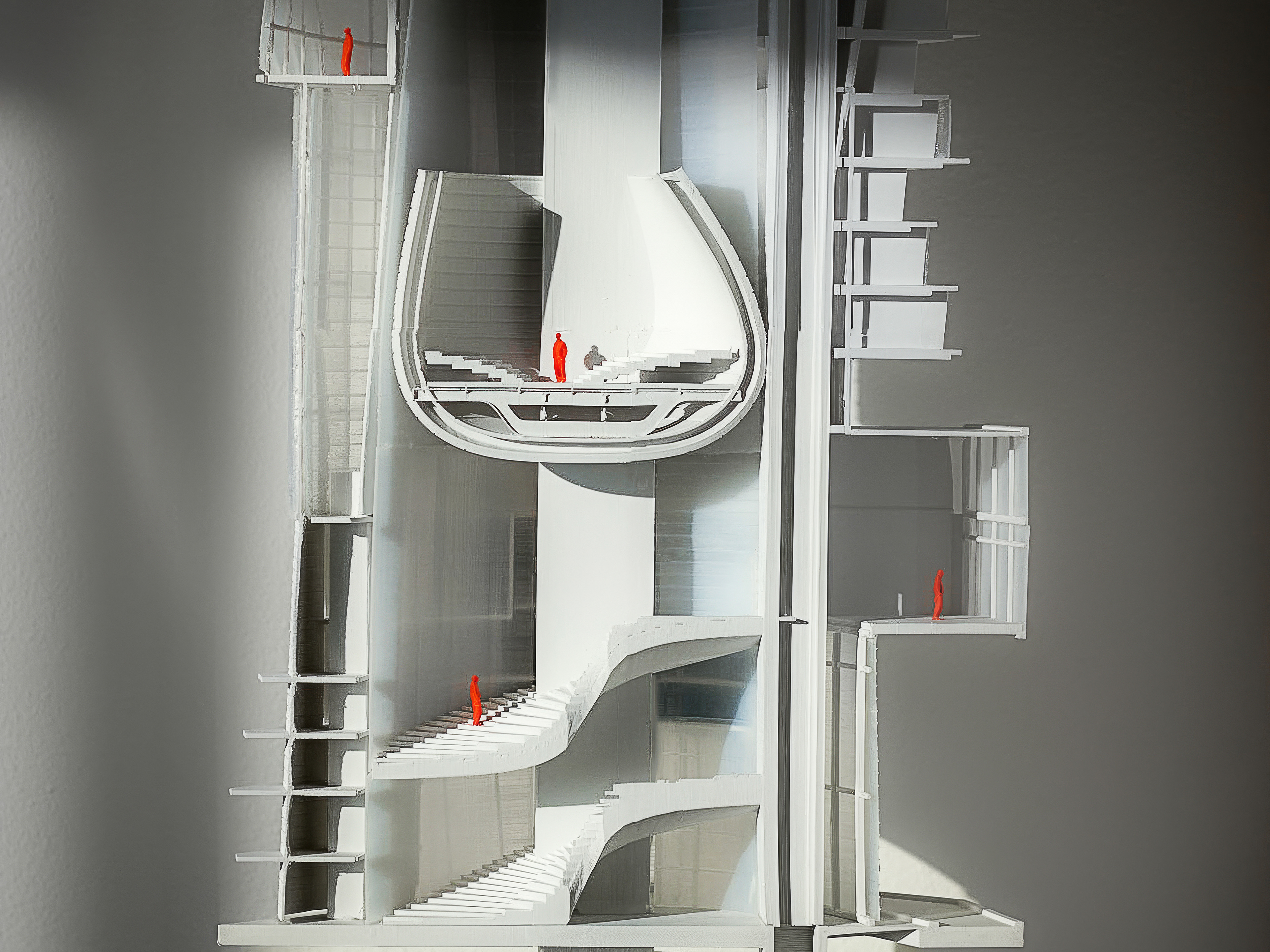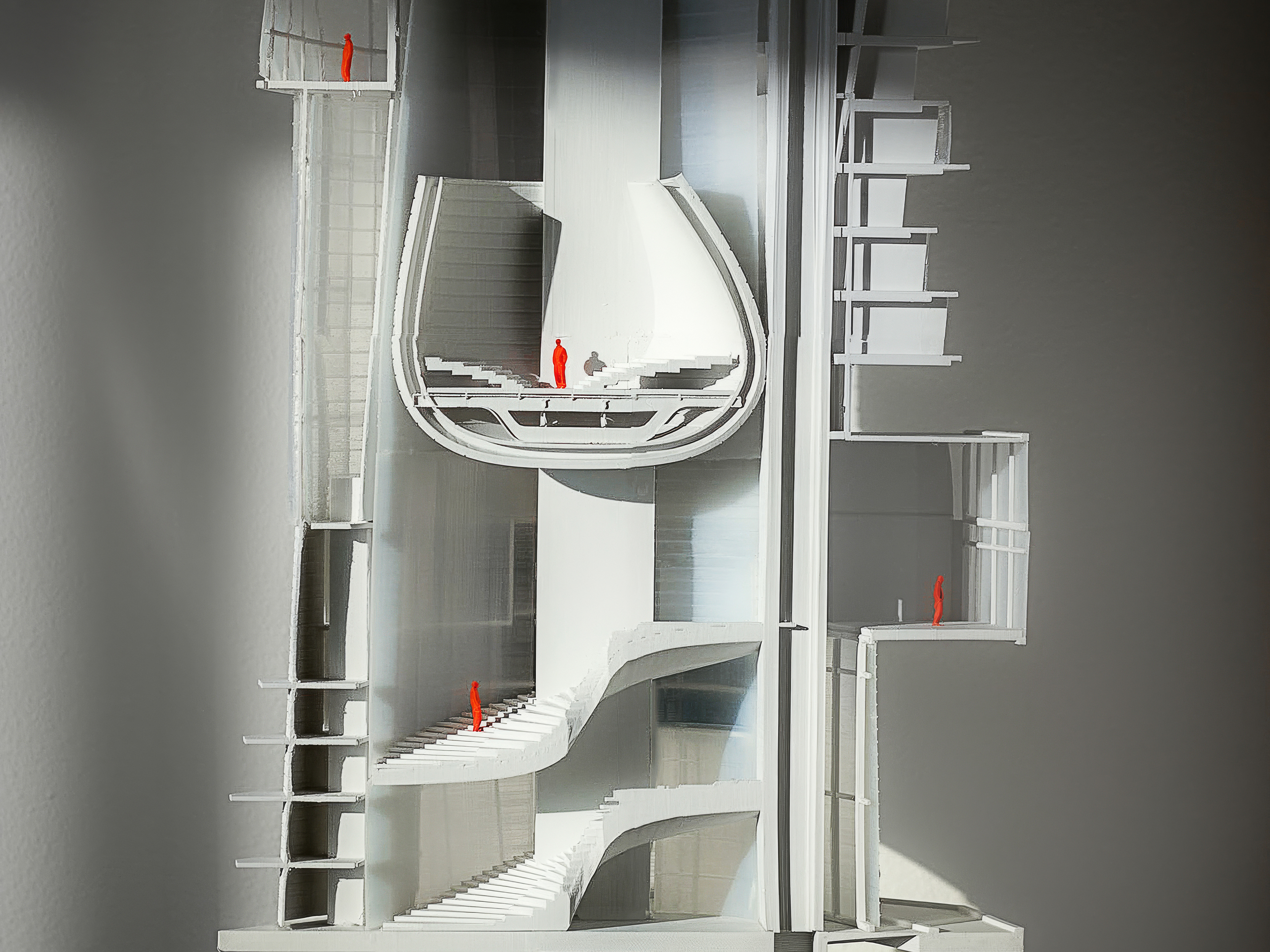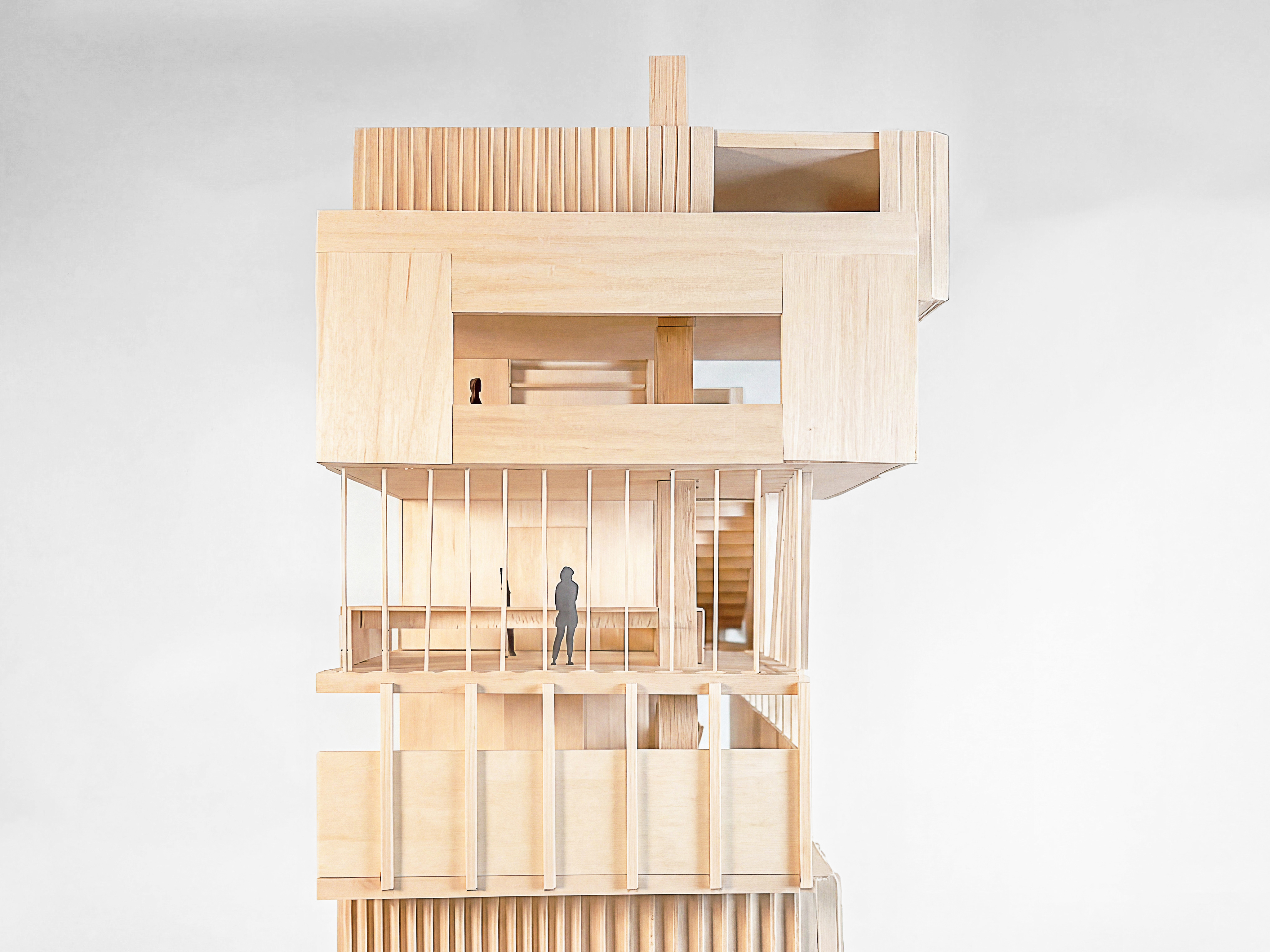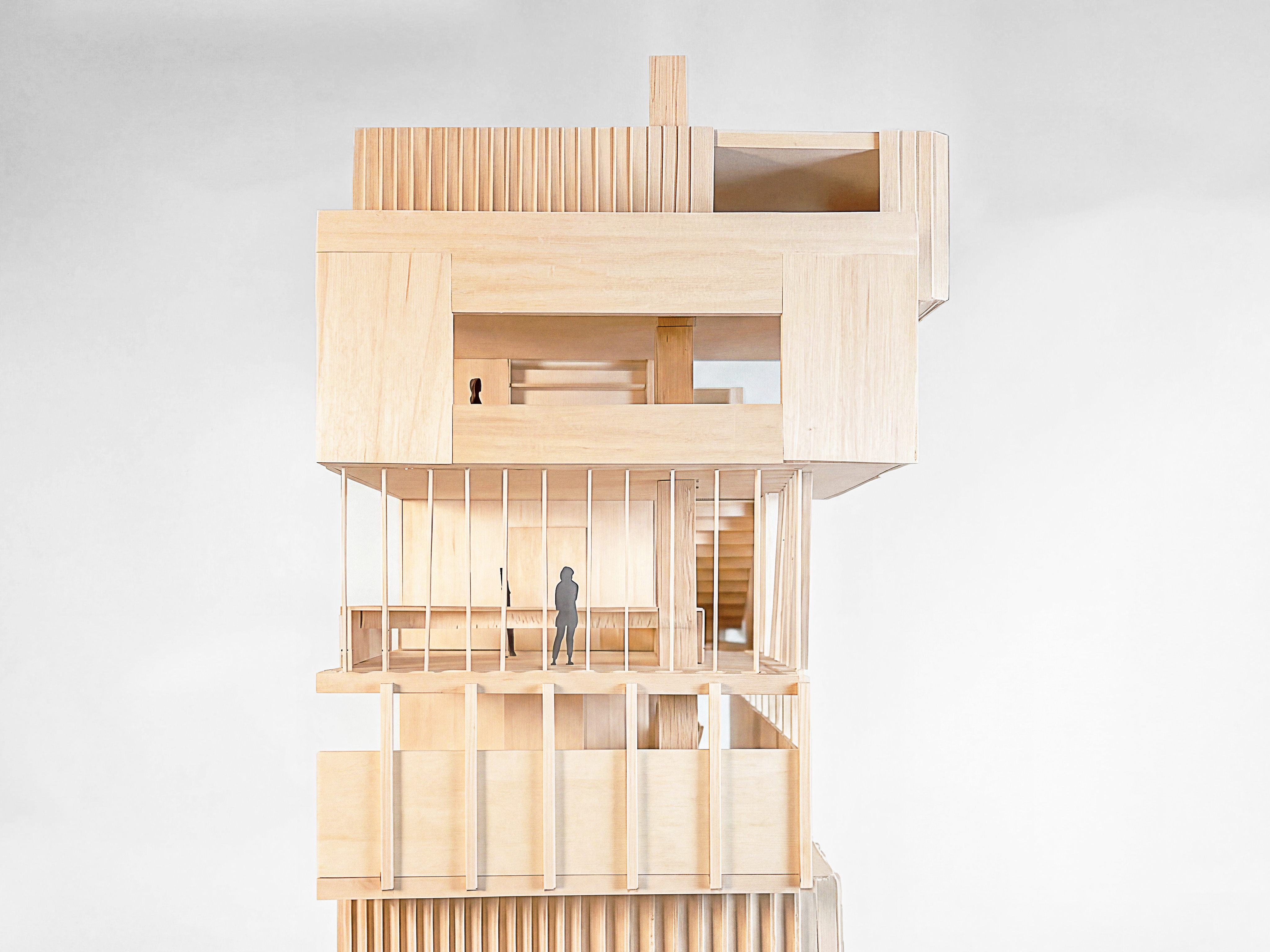
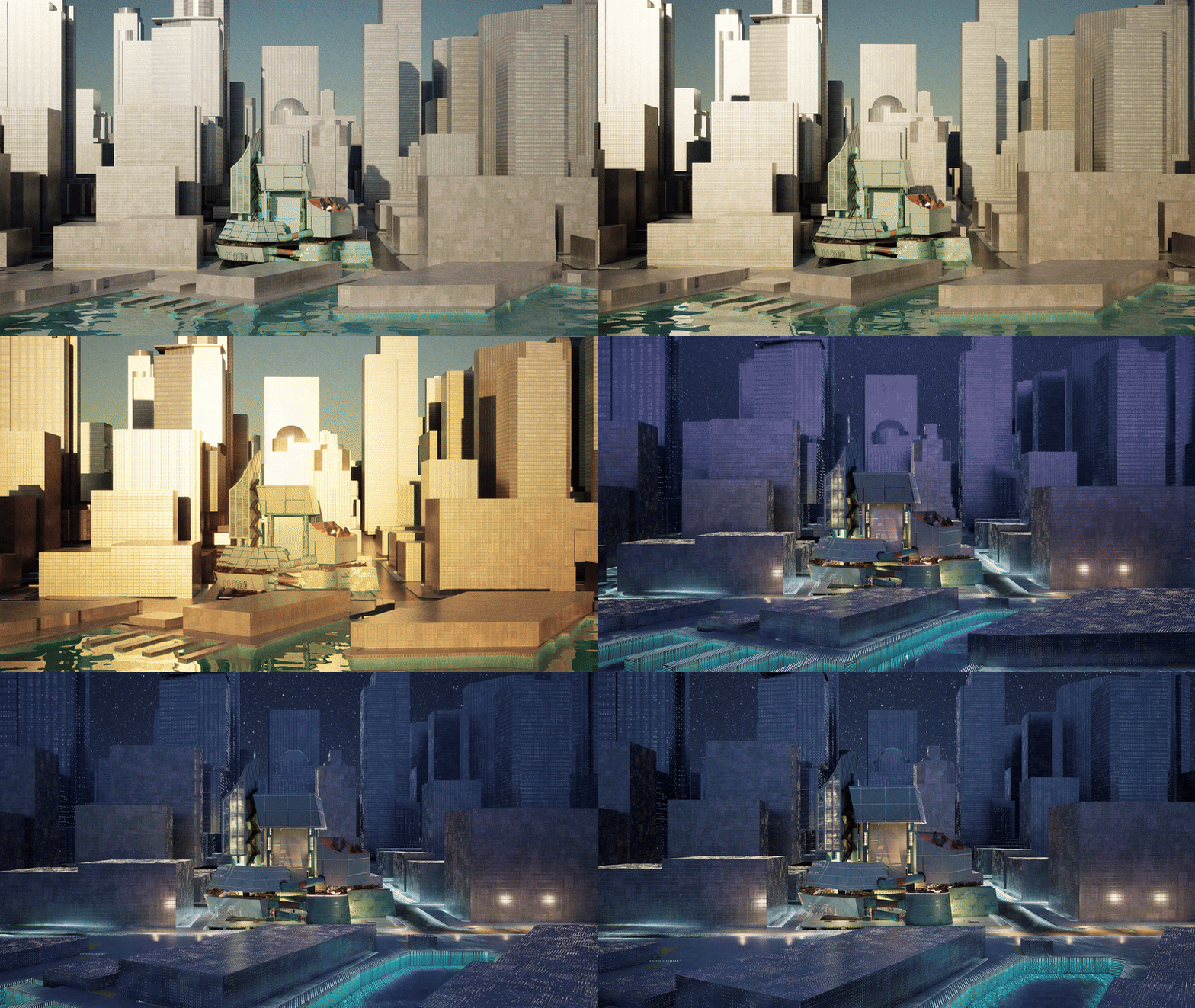
1100 ALASKAN is a design development set that investigates building assembly through the integration of structural tectonics, environmental performance, and construction cost. The project proposes a hyper-staged theater rooted in a geo-engineering strategy that introduces coastal winds into Seattle’s built environment. Wind is treated as an active architectural element, shaping spatial experience, performance, and programmatic organization. A modular system operates as a series of distinct theaters, generating varied spatial conditions while maintaining a cohesive architectural framework. Through detailed assemblies and technical drawings, the project reveals how structural systems, material logic, and environmental forces converge to translate concept into constructed form.
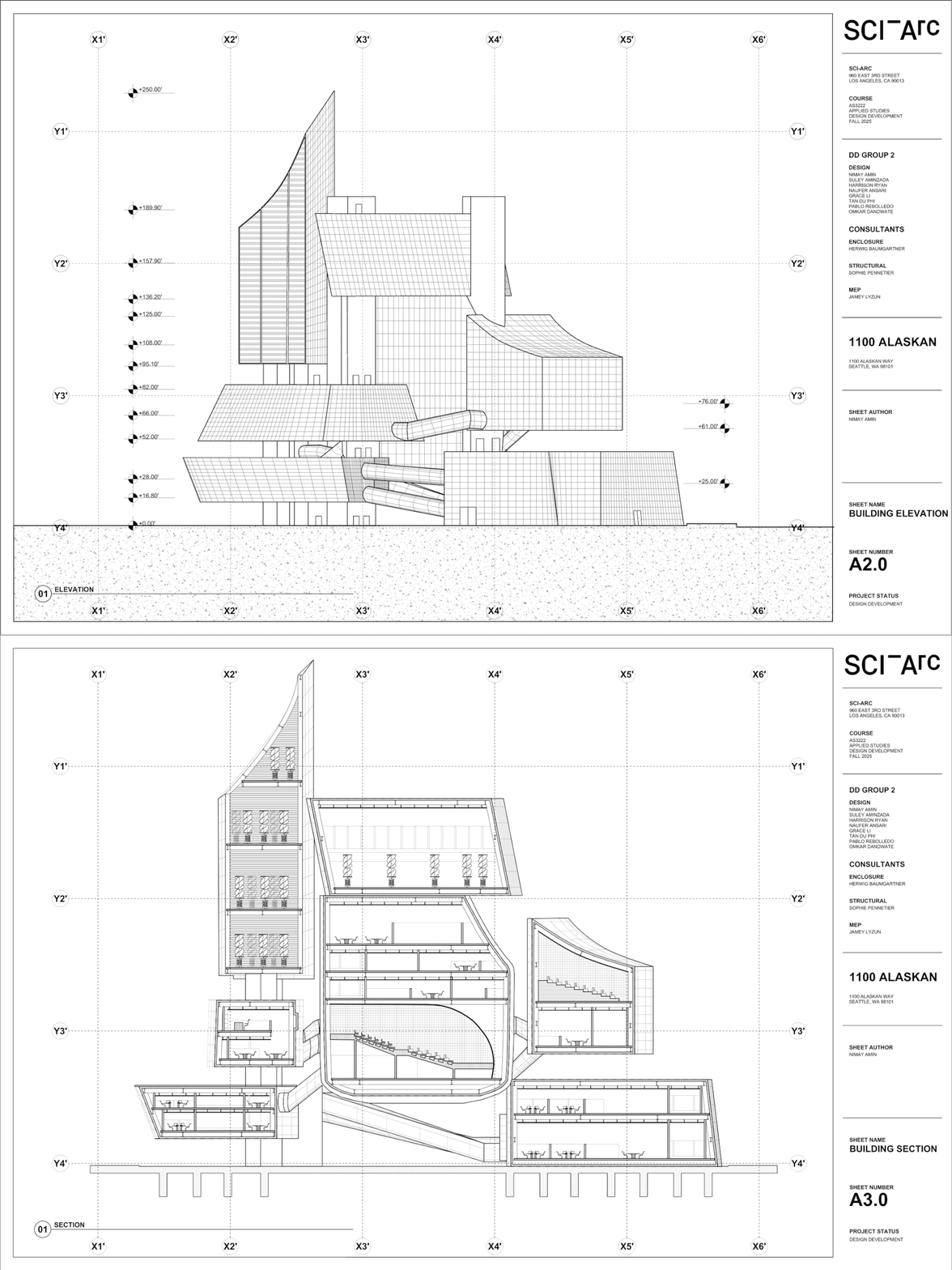
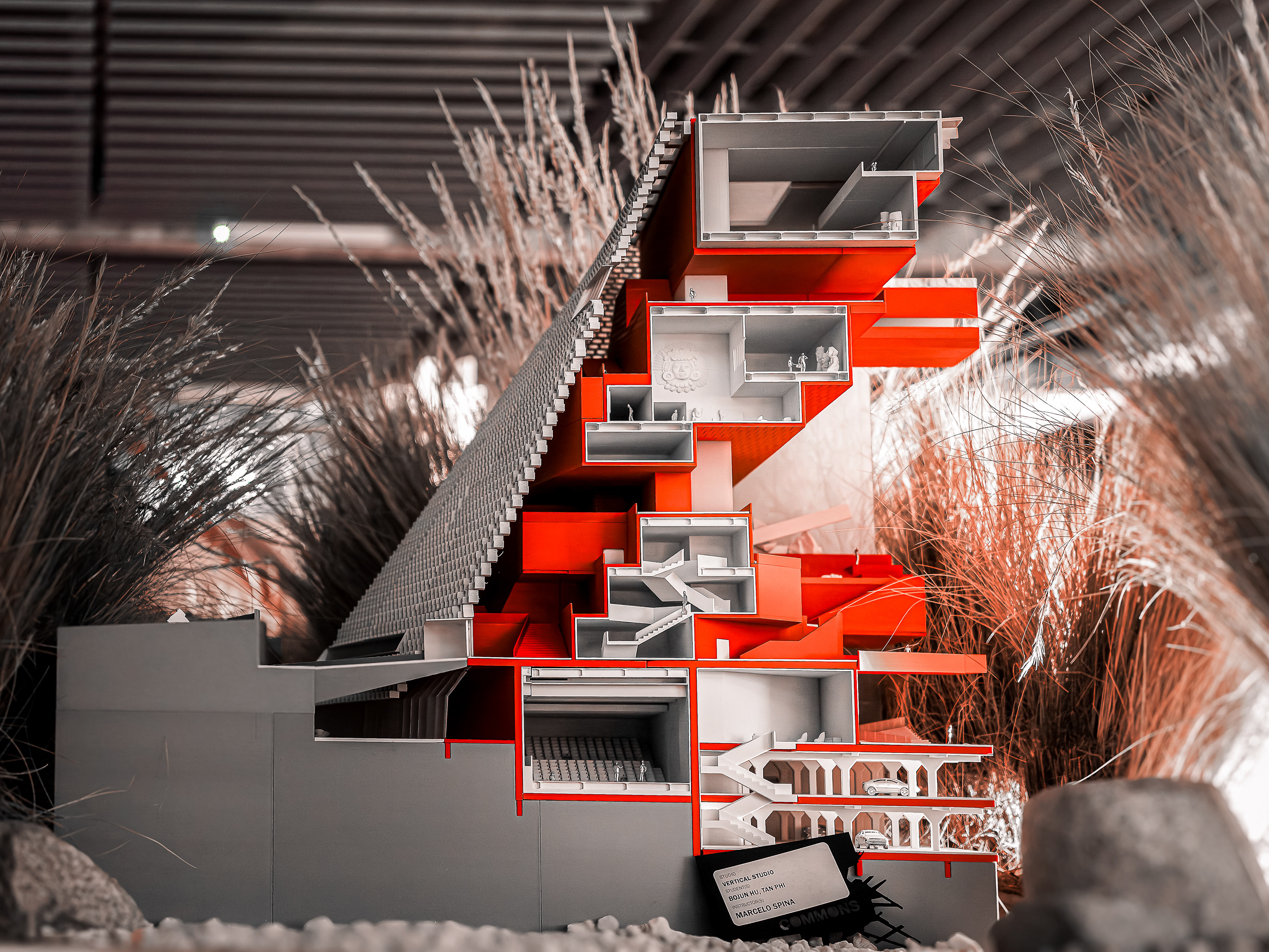
Section and elevation drawings reveal the building’s layered spatial organization and structural logic. They reveal how modular composition, structural frameworks, and façade assemblies operate together to shape interior experience, define programmatic relationships, and guide circulation through the architecture.
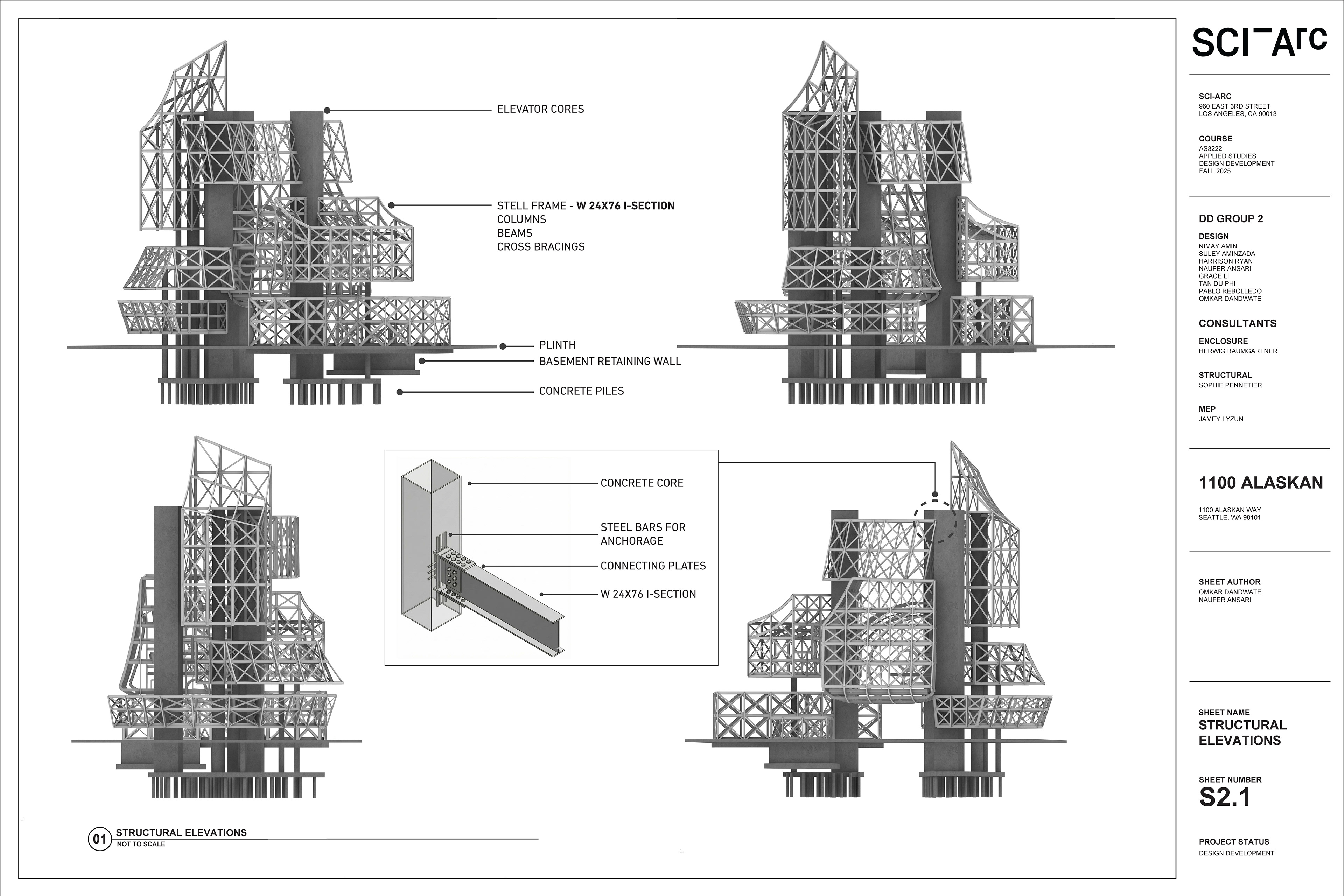
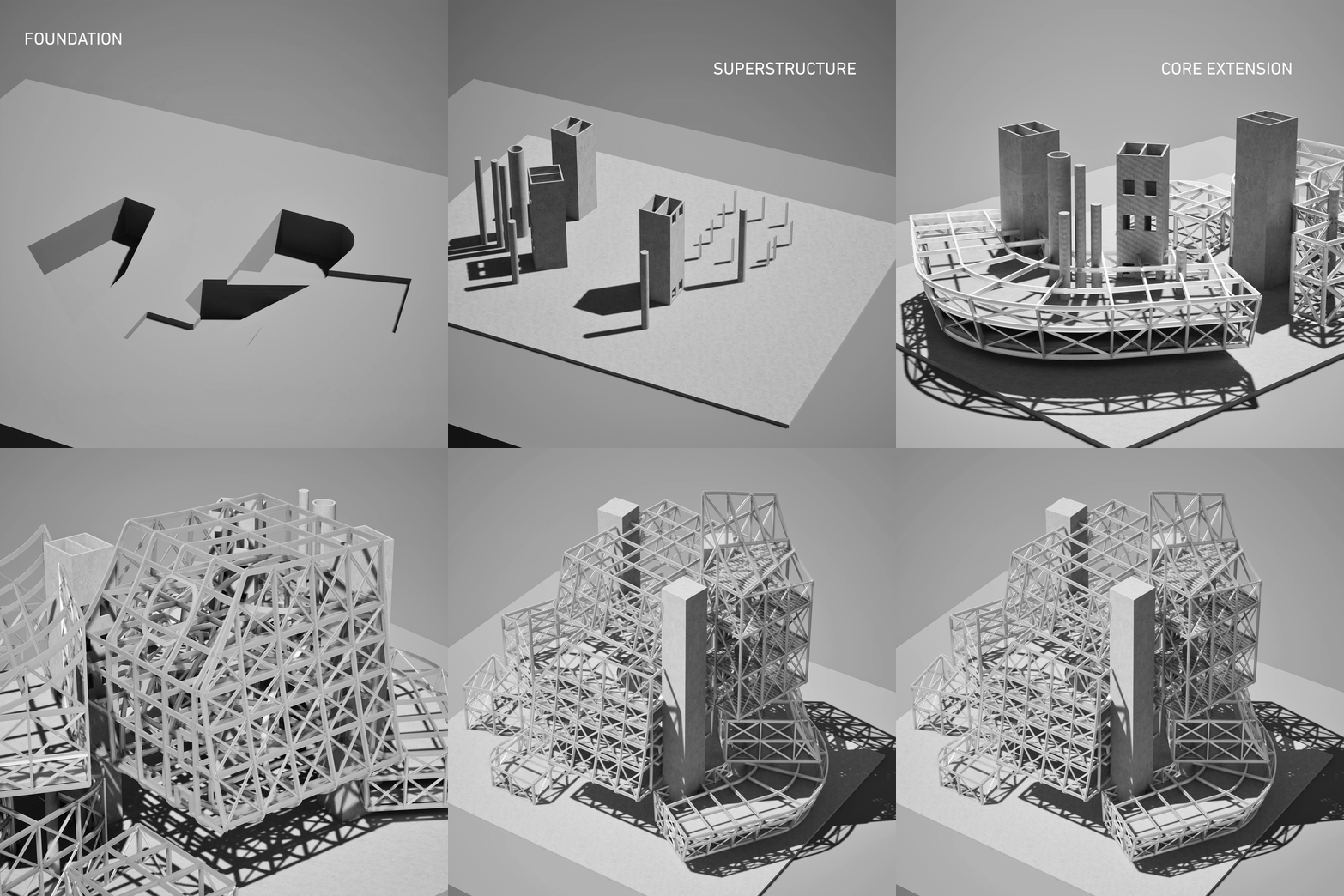
Structural elevations articulate the building’s tectonic order, making legible the relationship between cores, steel frames, bracing, and foundations, while the animation diagrams the sequential assembly and load logics in the architectural form.
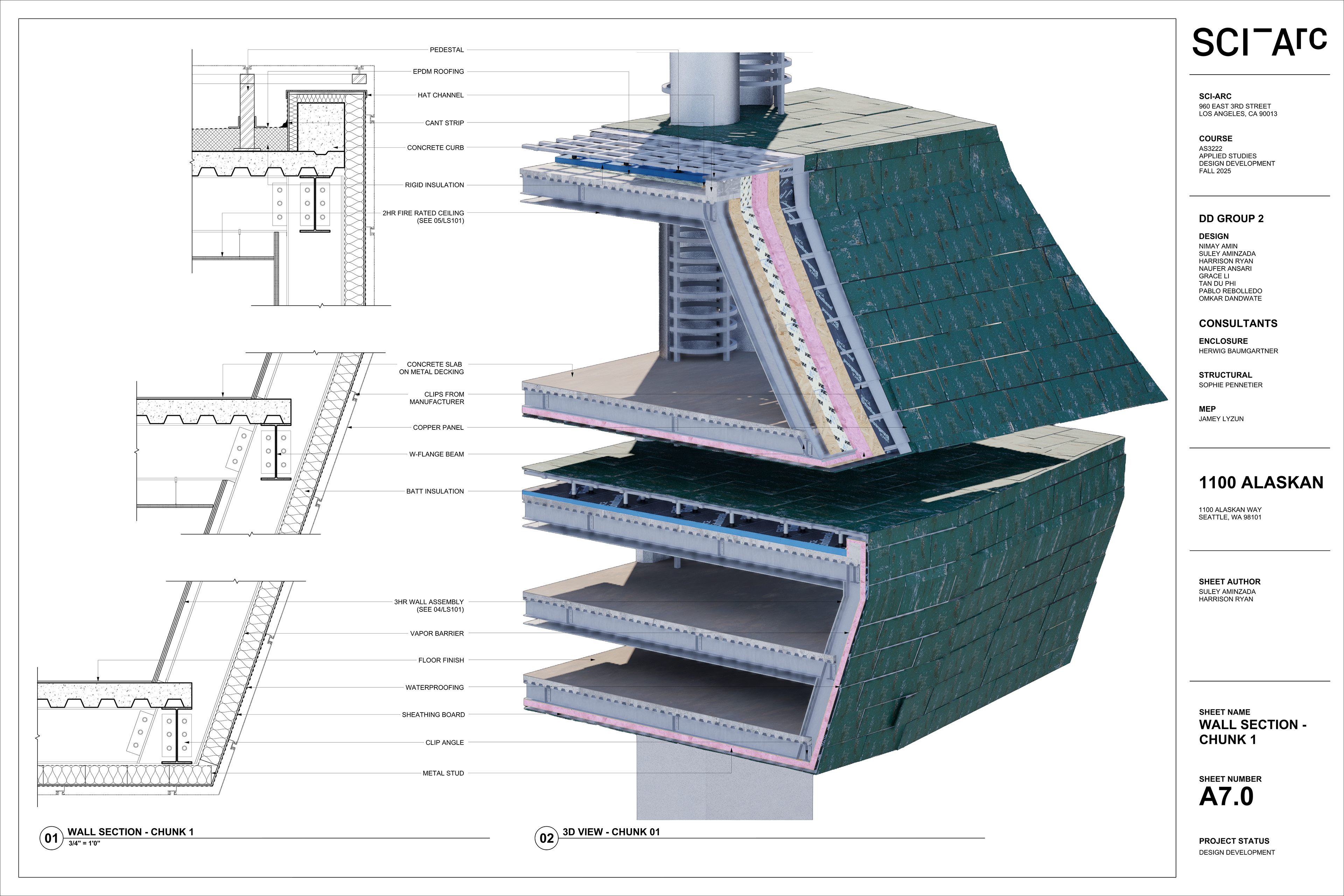
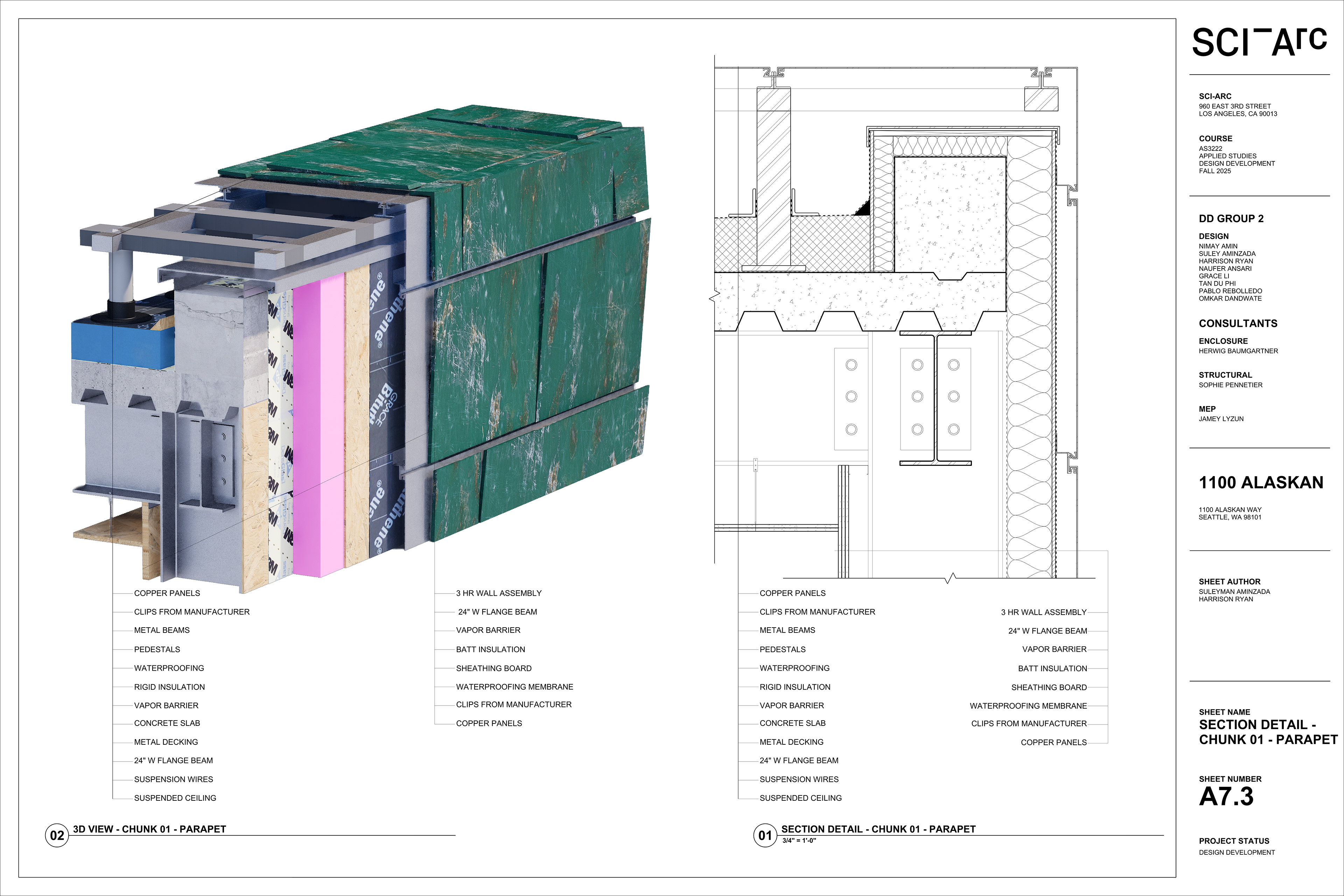
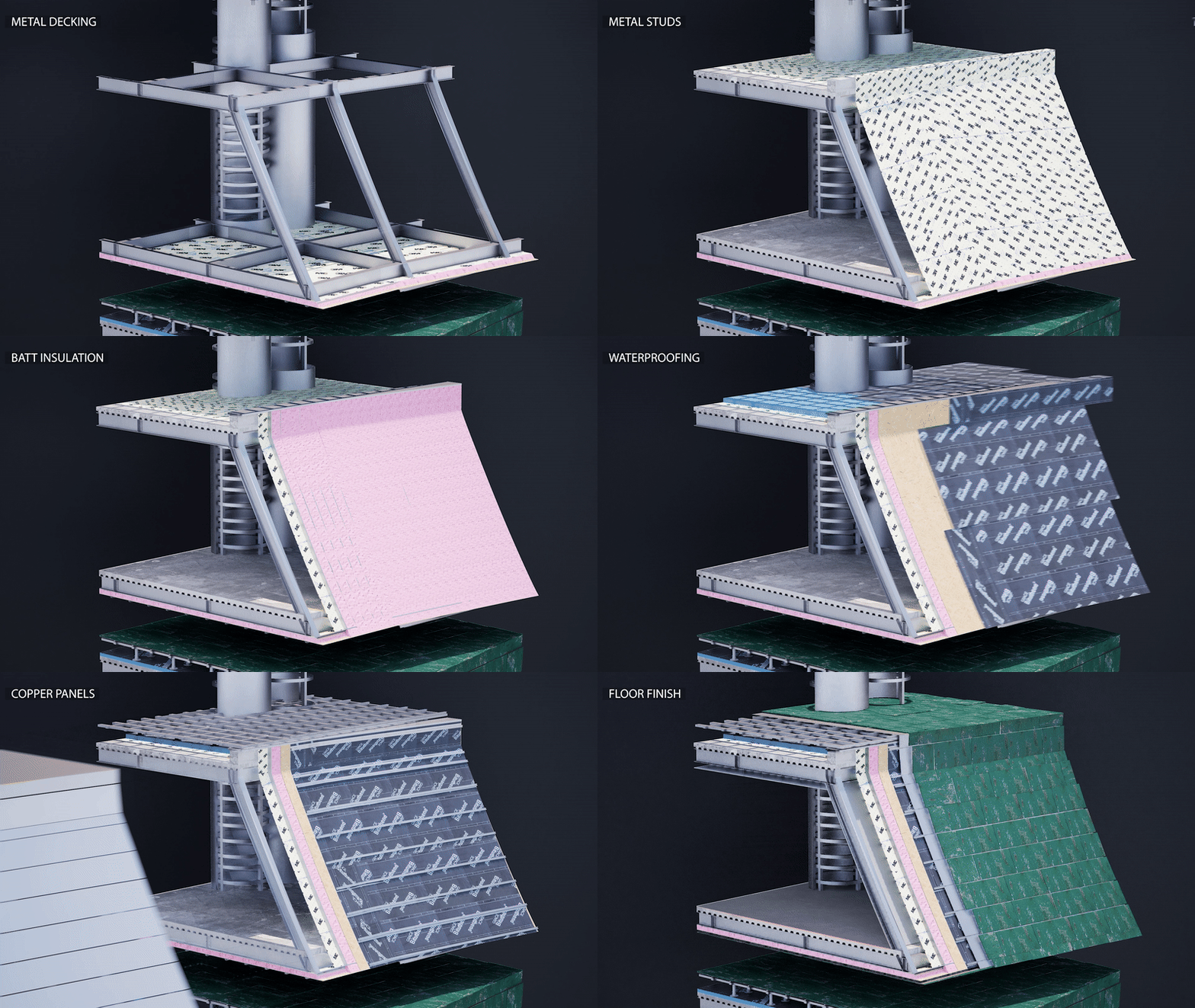
Wall sections and detail drawings articulate the building's chunk as a layered tectonic system, exposing material assemblies, technical interfaces, and structural depth that govern performance, enclosure, and construction logic.
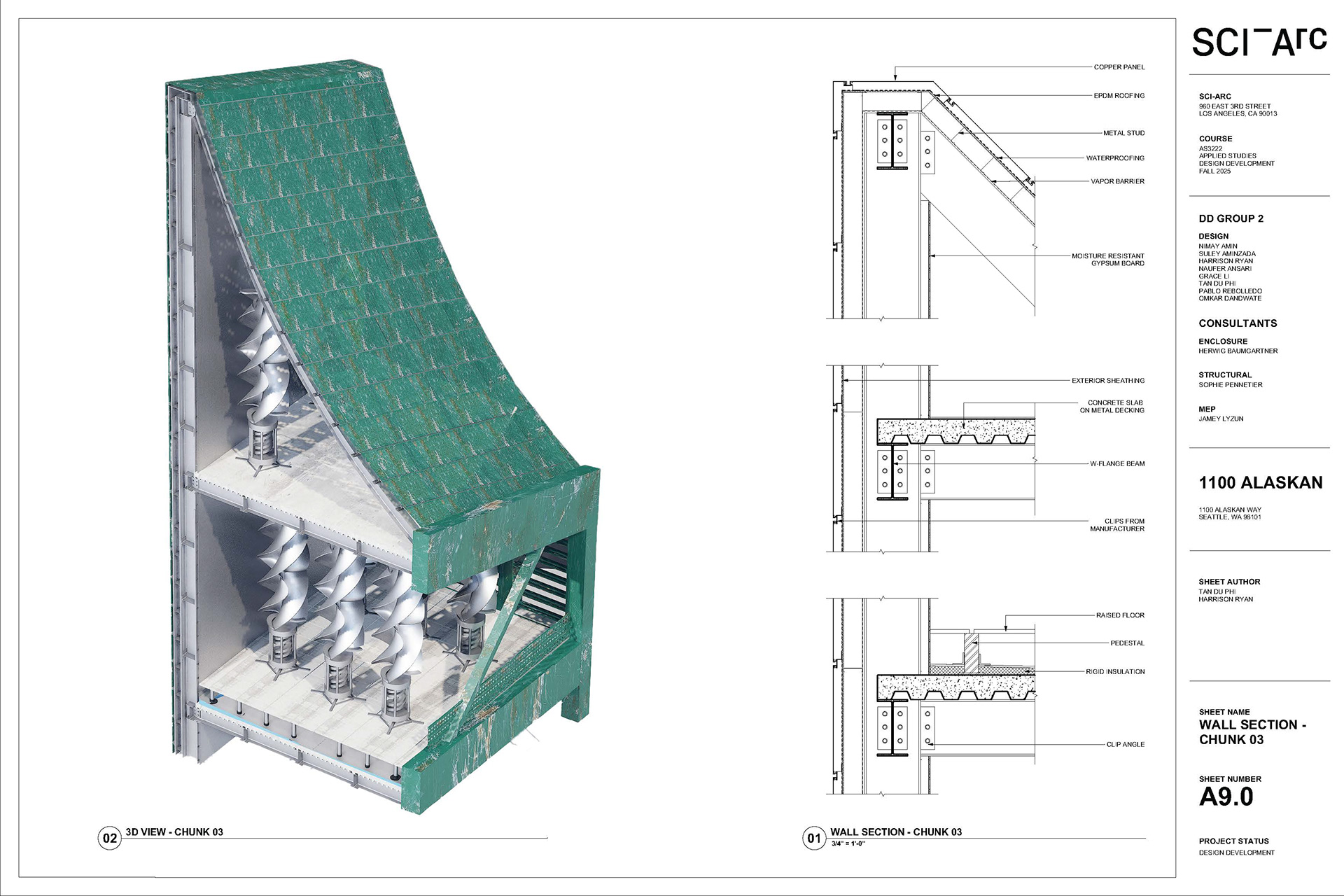
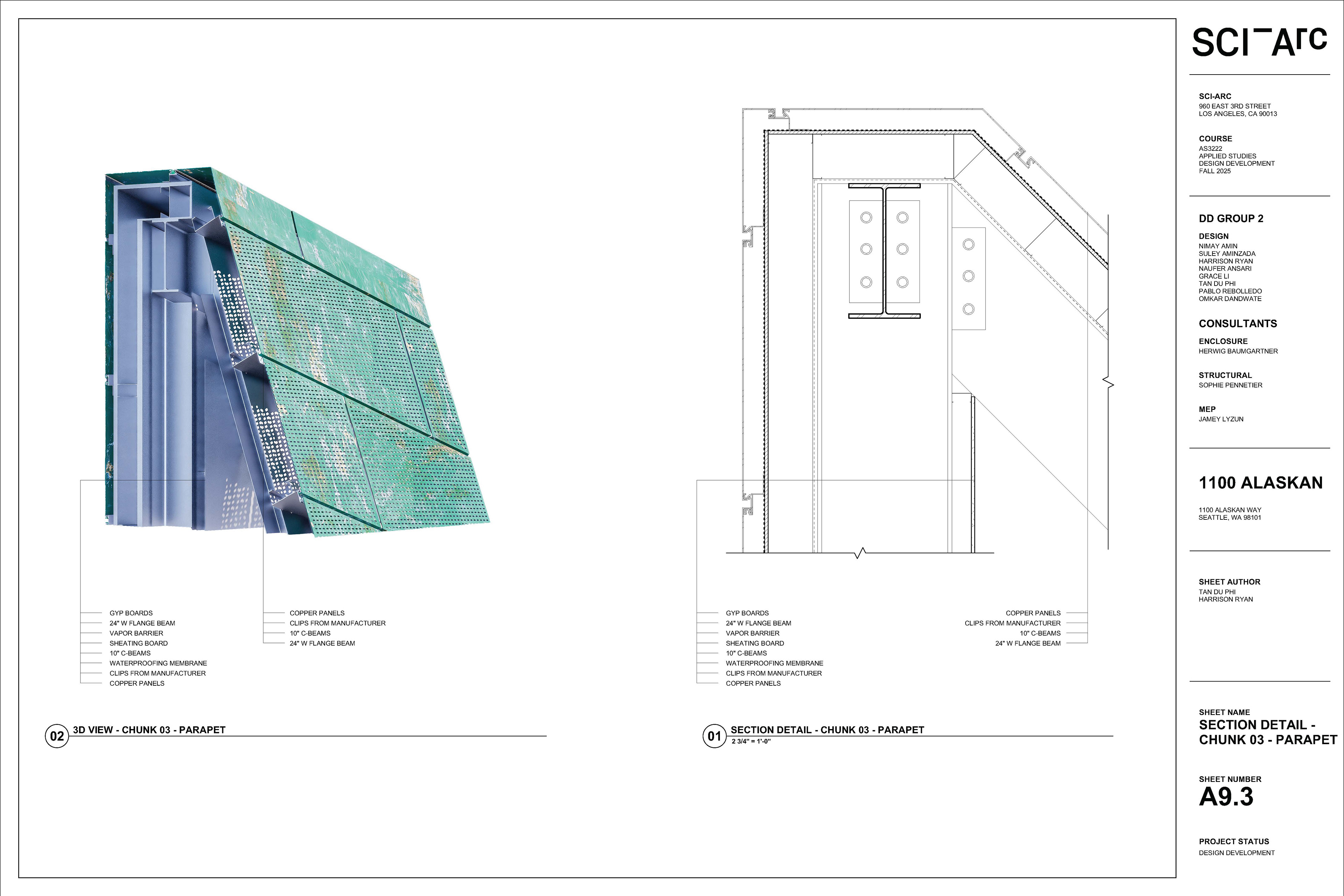
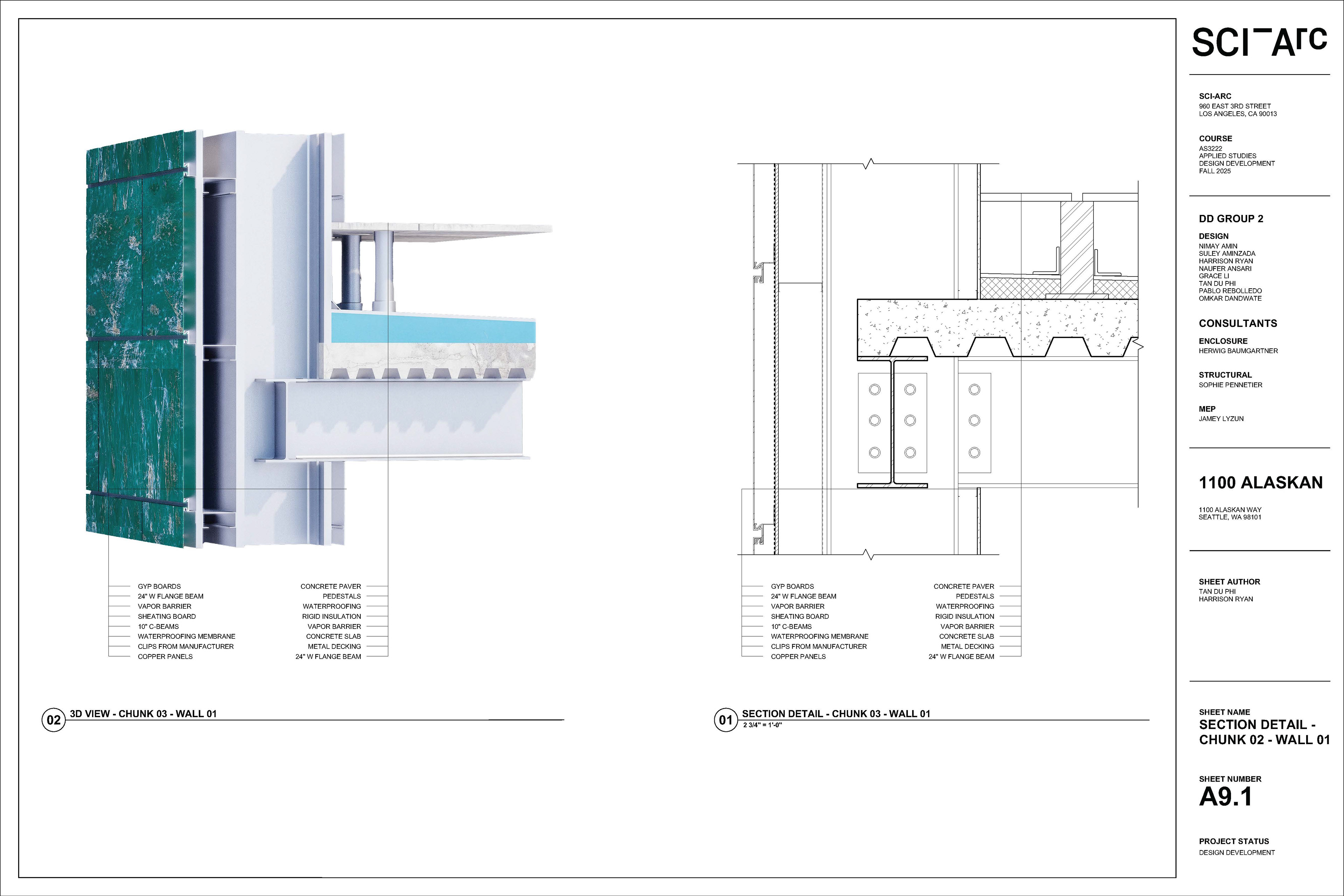
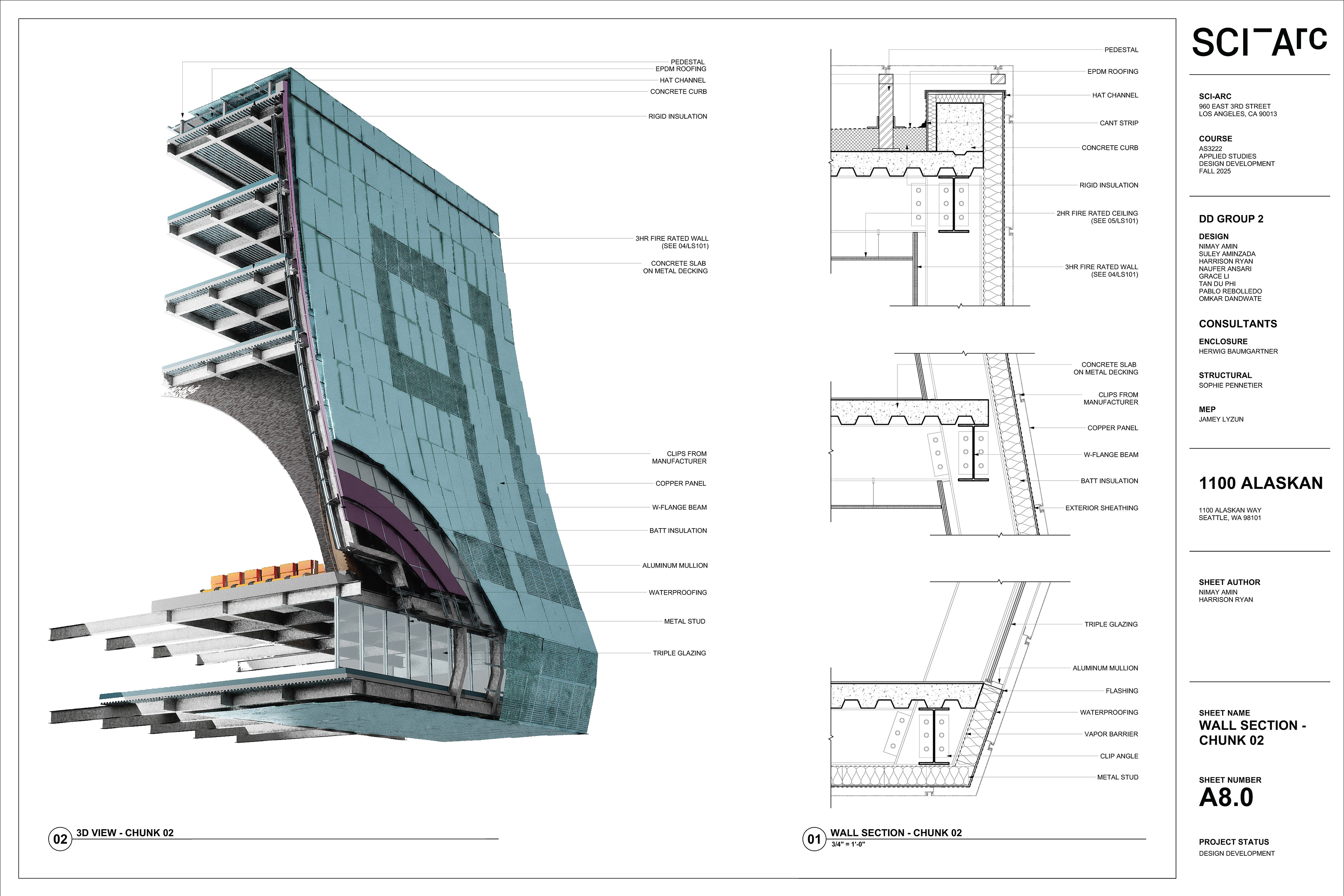
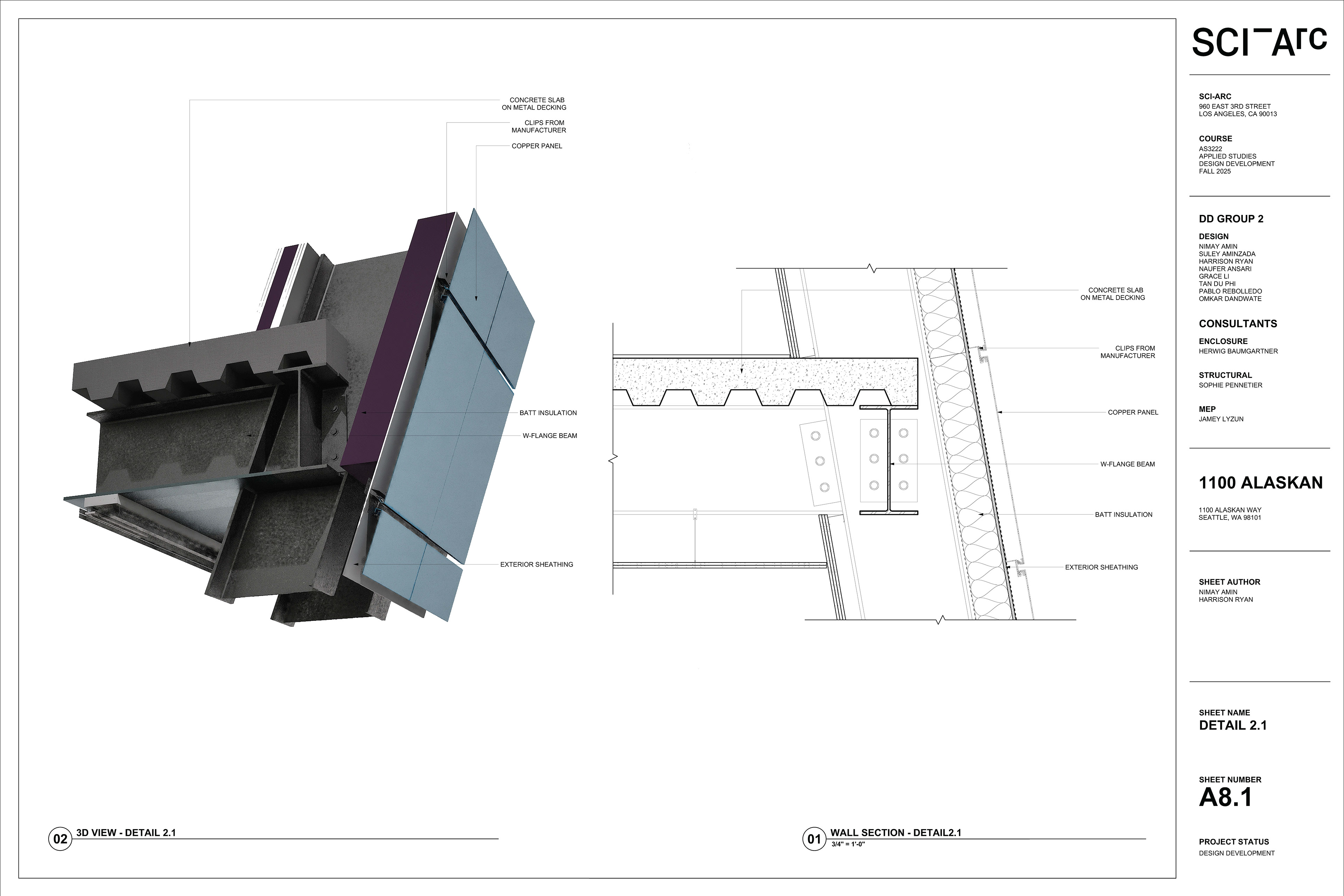
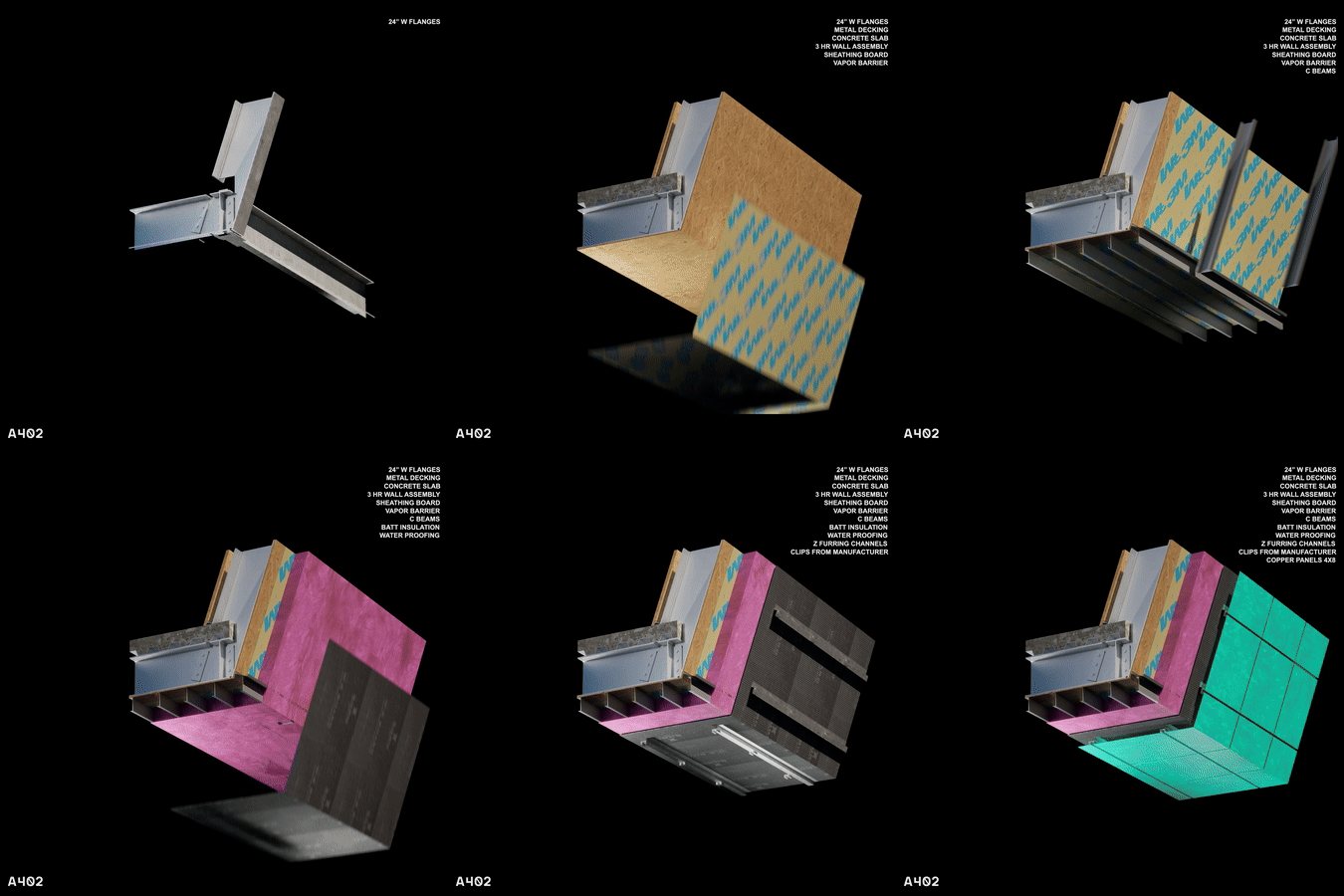
Wall sections and detail drawings reveal the main theater as a layered tectonic system, exposing material assemblies, technical interfaces, and structural depth of the detail connections while showing how each joint and pieces come together.
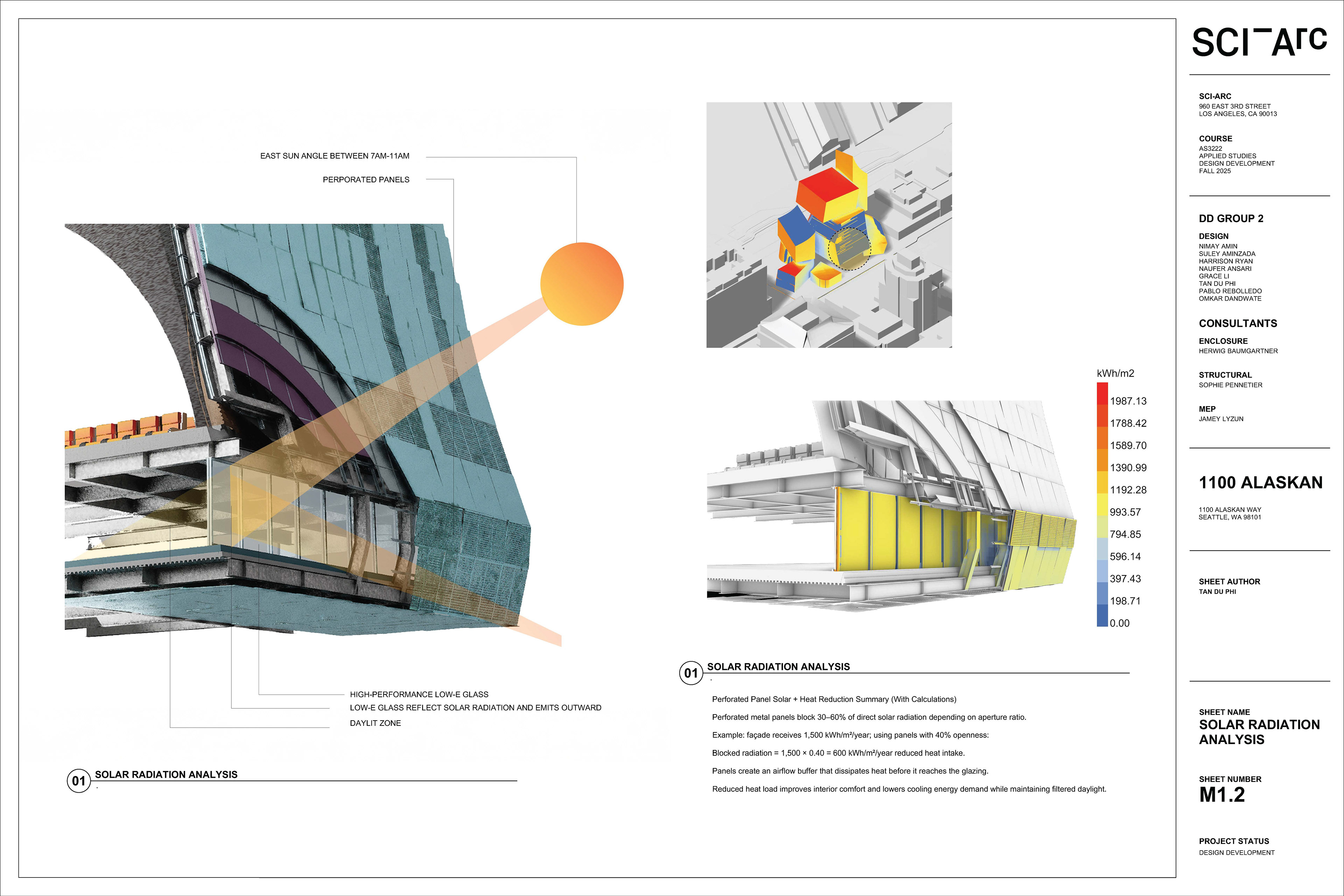
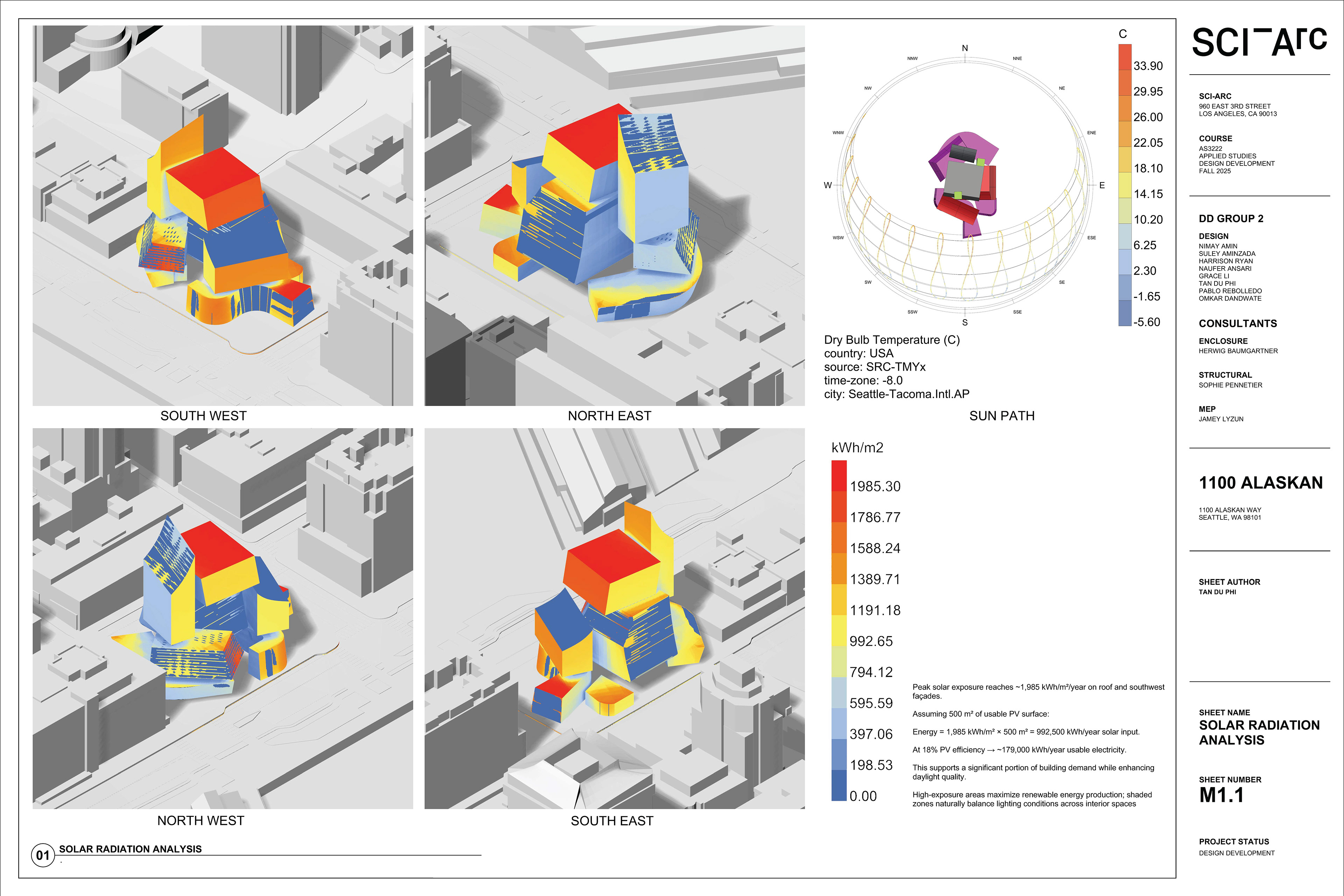
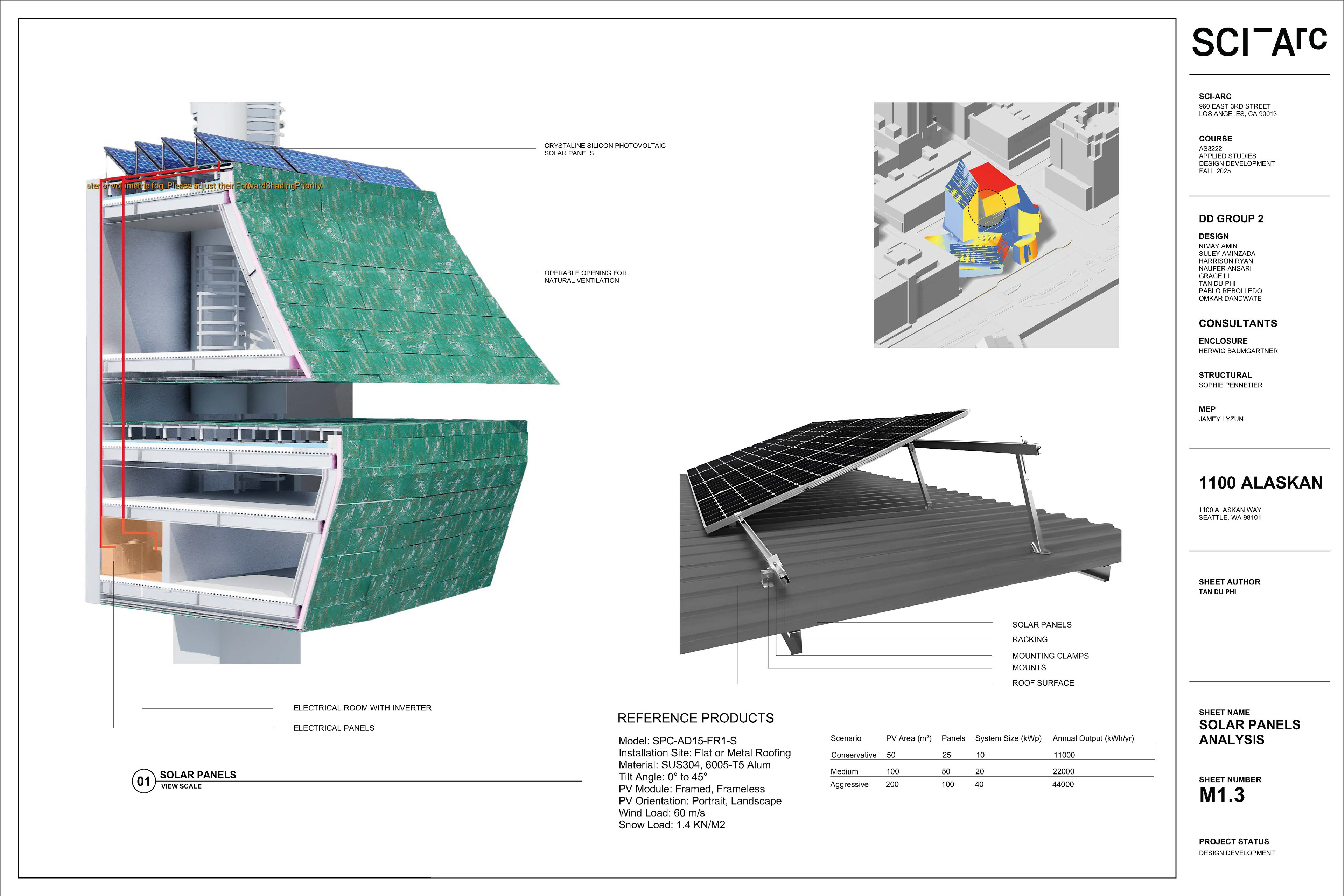
Solar radiation analysis evaluates existing environmental impacts on ventilation, heat gain, and exposure, translating data into performance-driven strategies that optimize material selection, solar panel placement, and energy output across the building system.
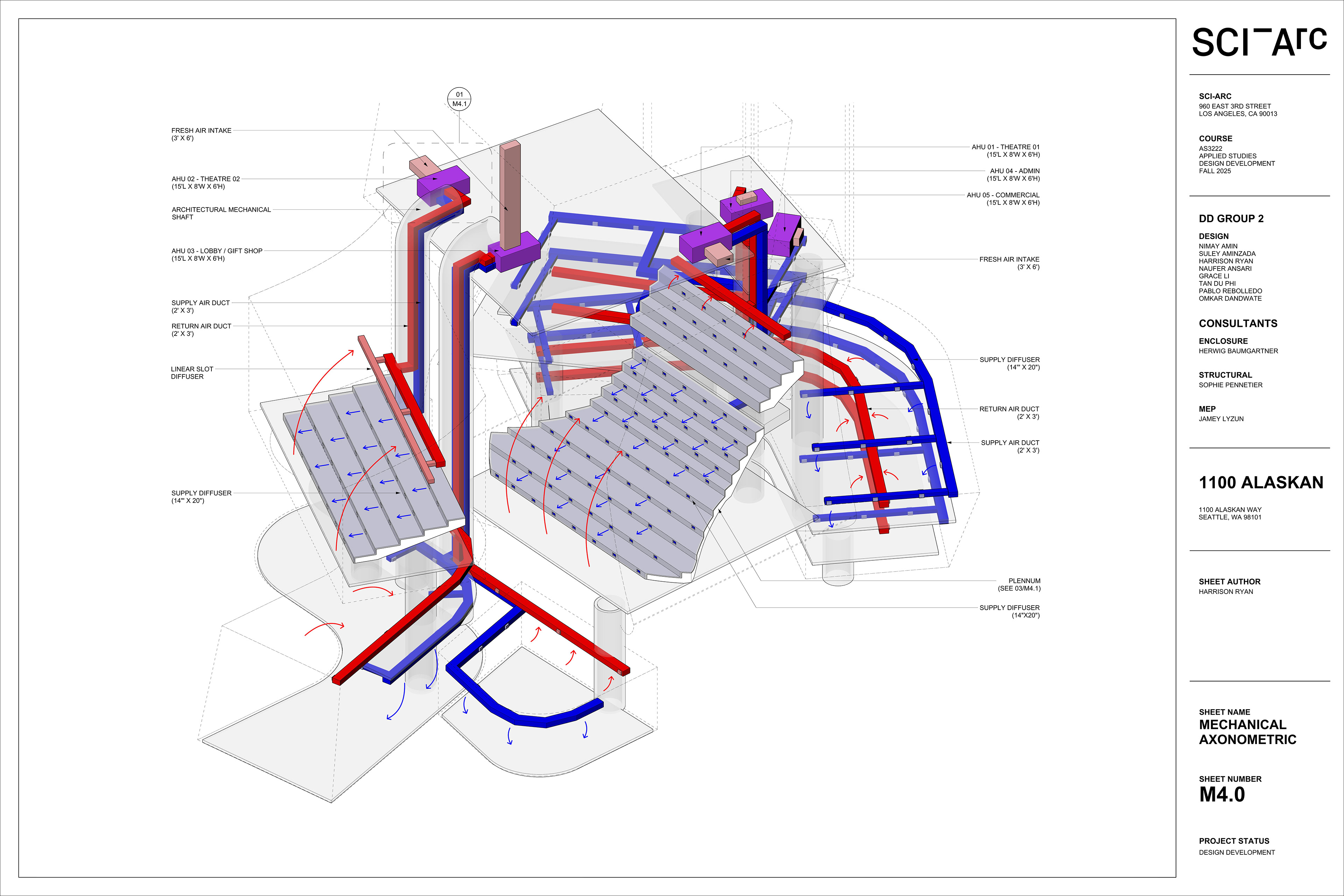
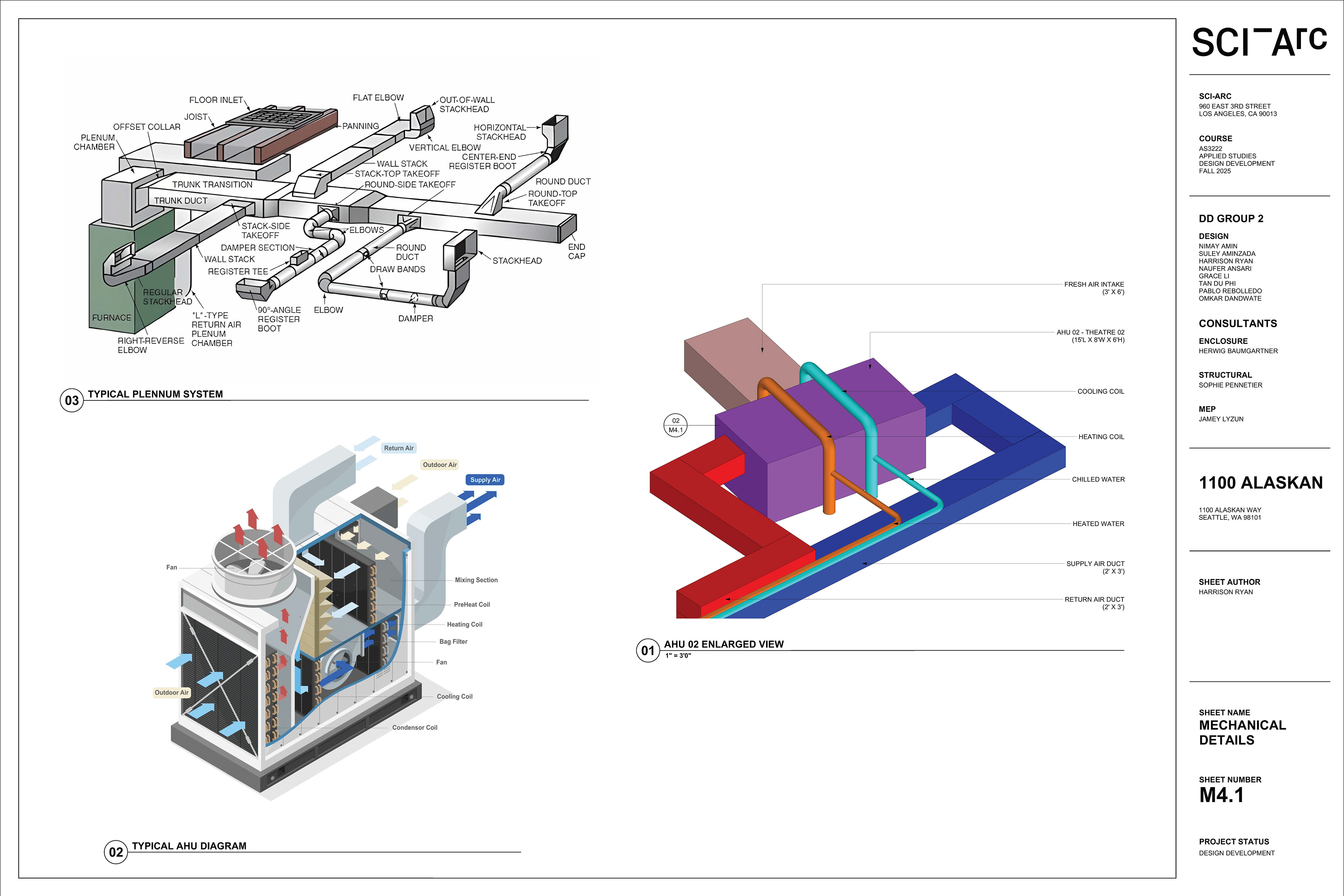
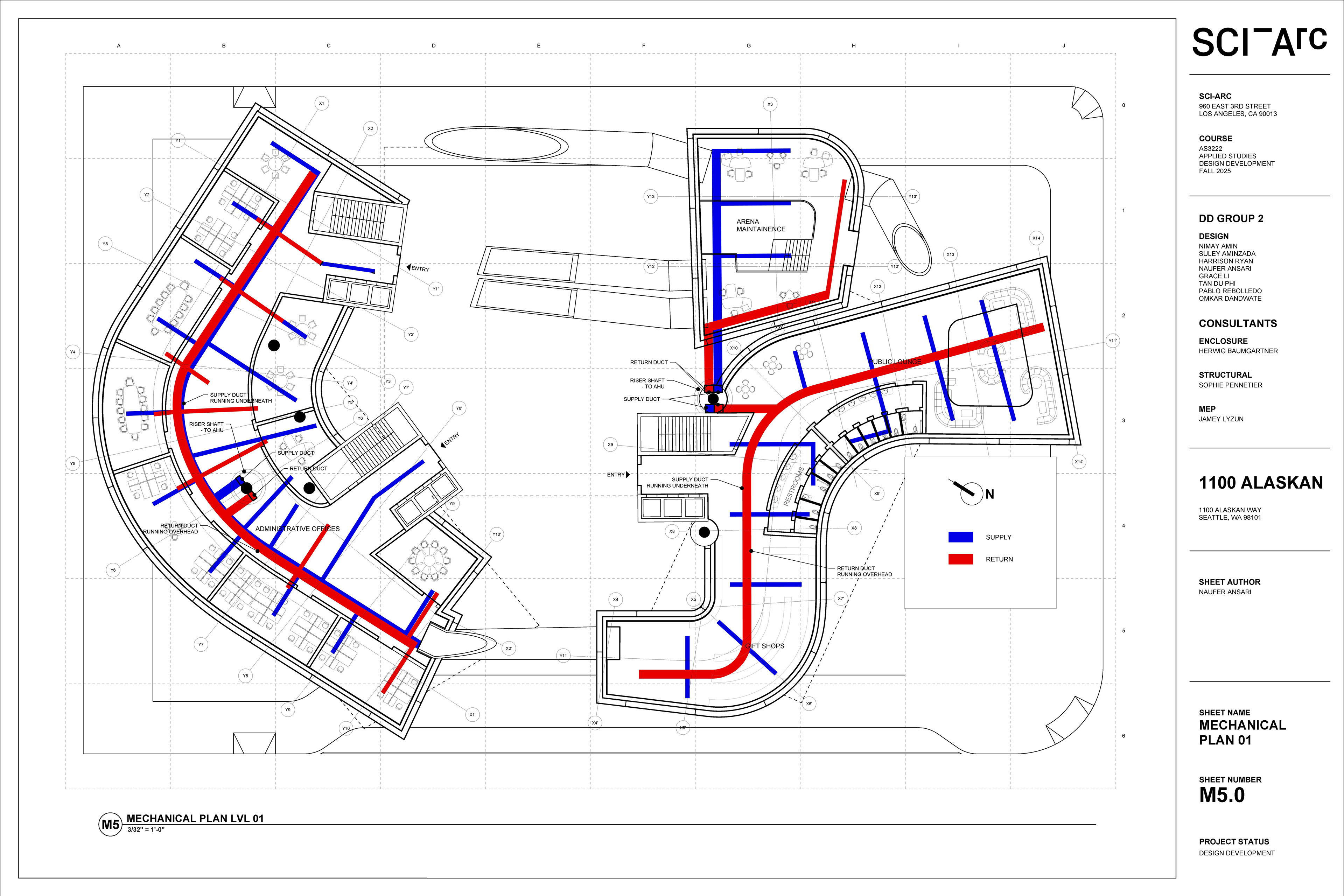
Internally, mechanical systems articulate the theater’s ventilation framework, detailing air supply distribution and tectonic organization across levels, seatings, and adjacent rooms to clarify environmental performance and spatial integration across the whole.
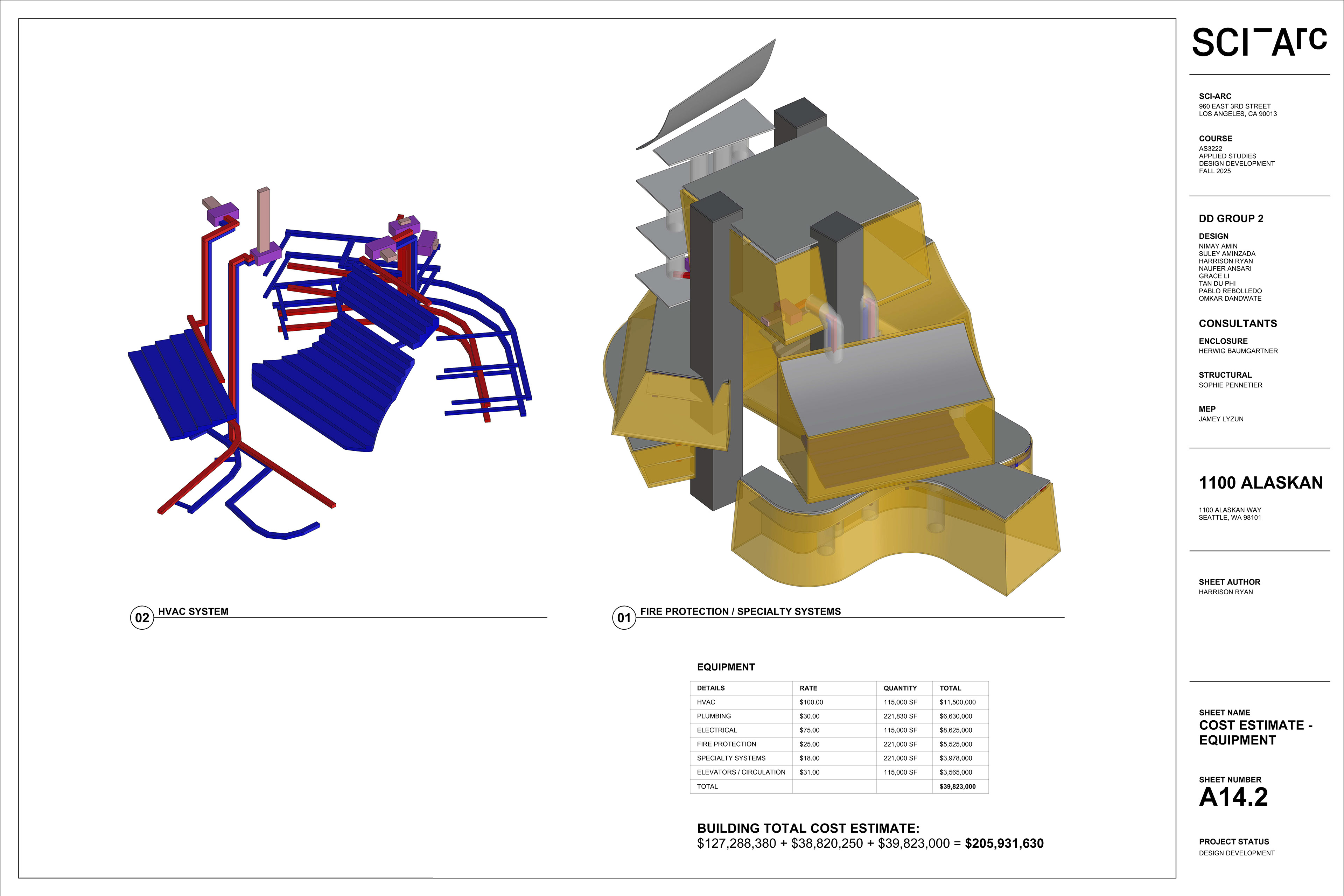
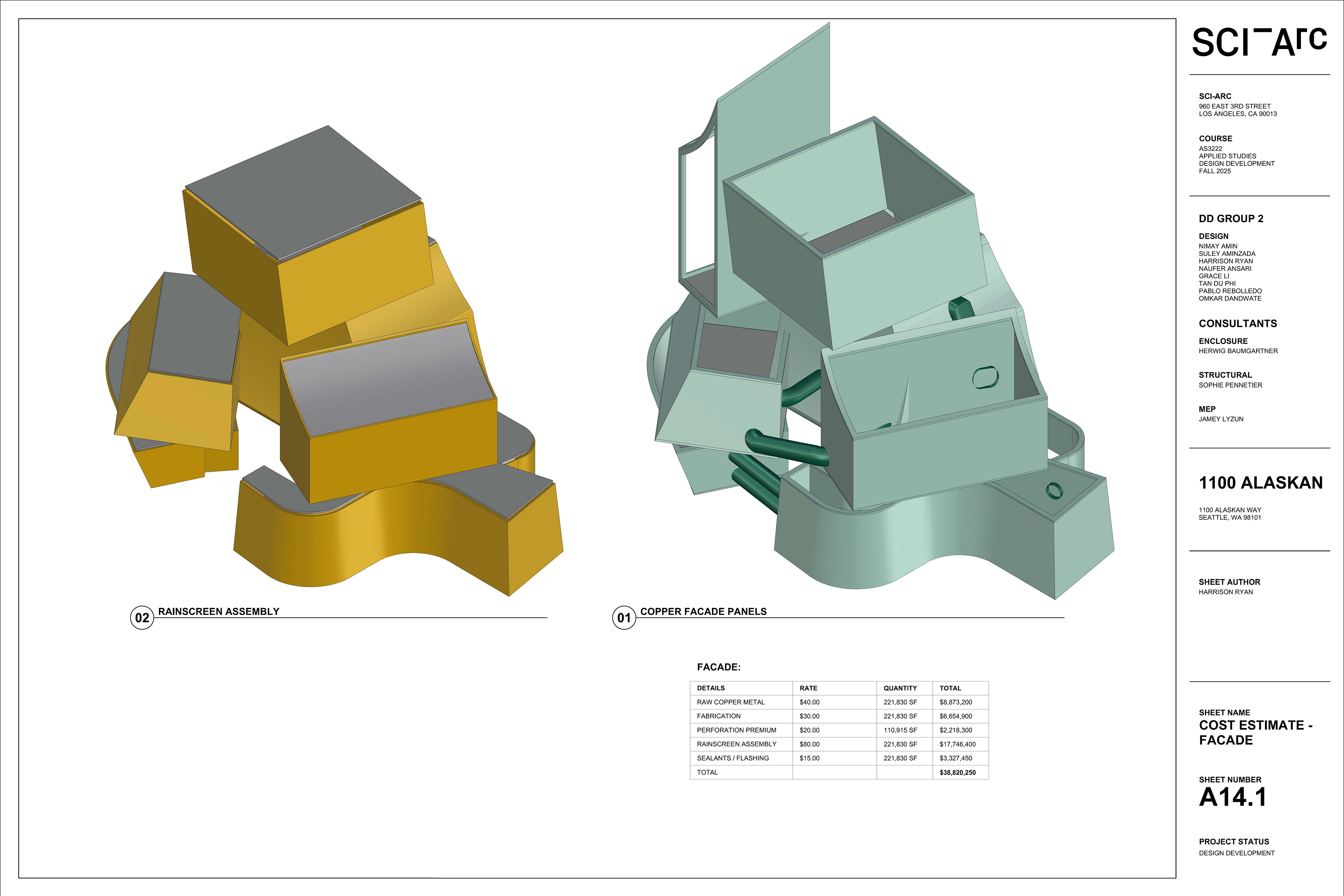
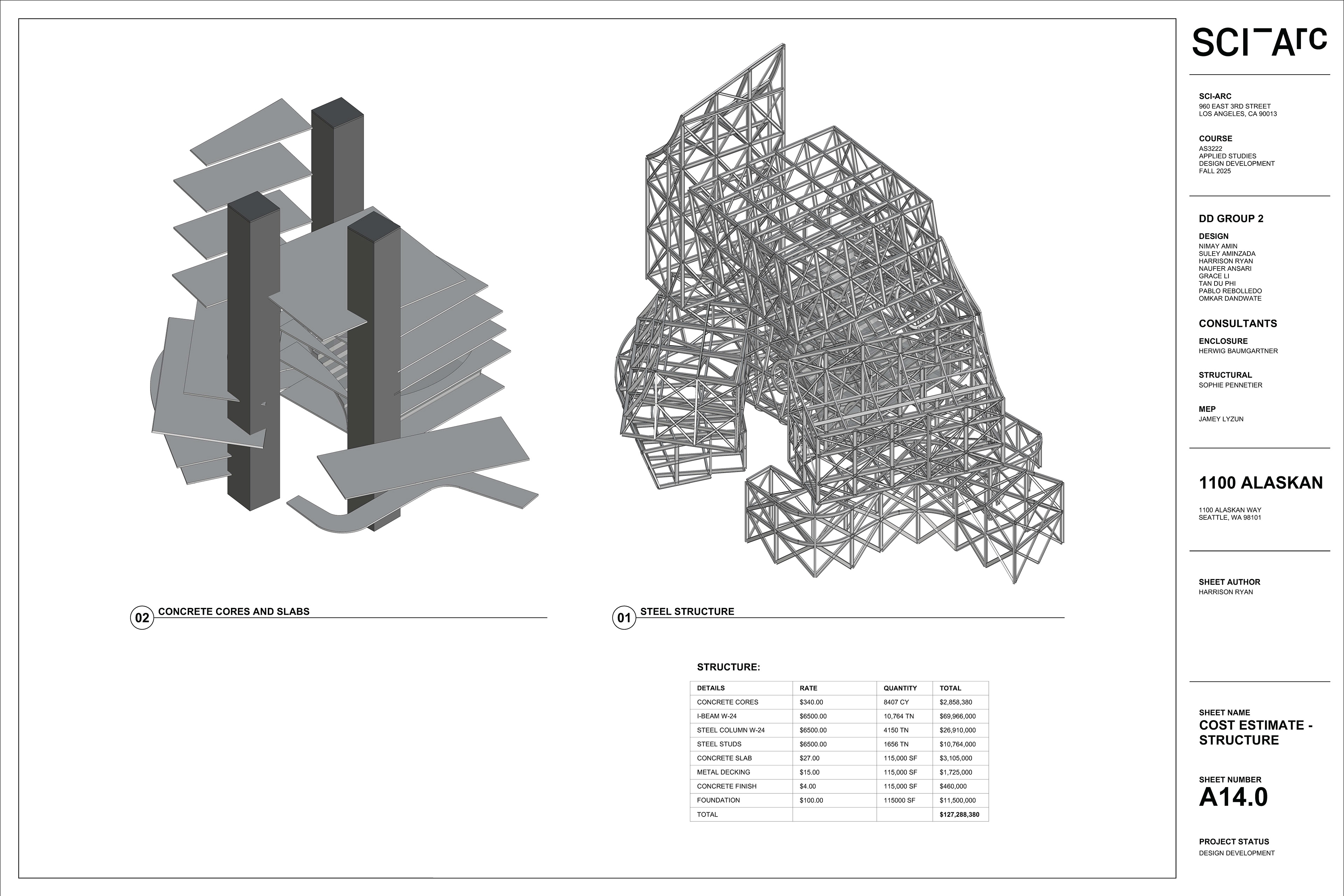
Together, the structural assembly and environmental analysis operate as a dual-layer system that redefines the relationship between interior and exterior composition. This framework reveals the building’s tectonic logic between concept and construction, as well as between enclosure and exposure. 1100 ALASKAN is not merely a conceptual proposal, but a construction-driven reinterpretation of architectural assembly. Structural tectonics function as an operative system that shows, informs, and constructs. Through the integration of environmental forces, structural logic, and programmatic intent, the project proposes technical assemblies as architectural instruments capable of recalibrating spatial conditions, programmatic performance, and environmental integration within the building.