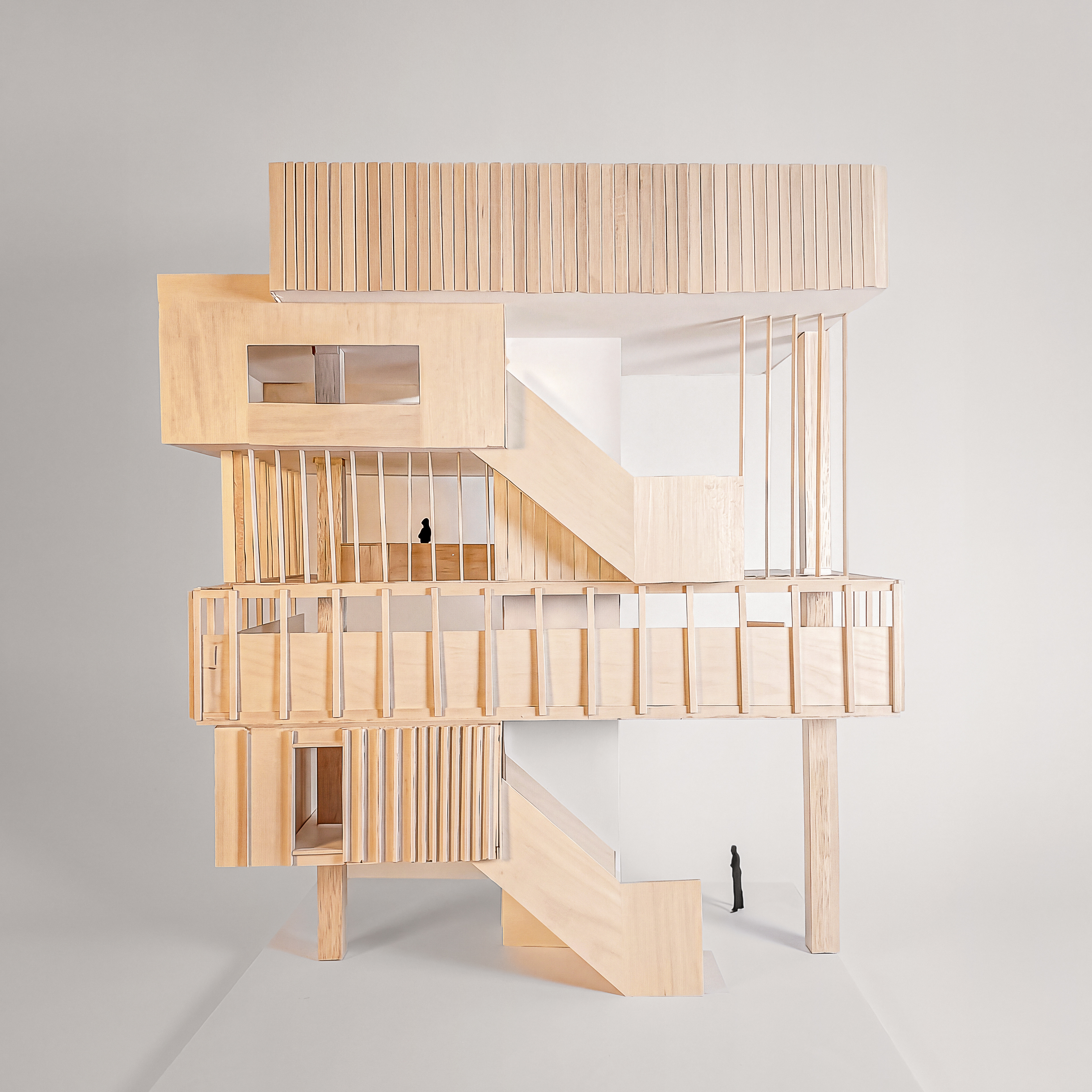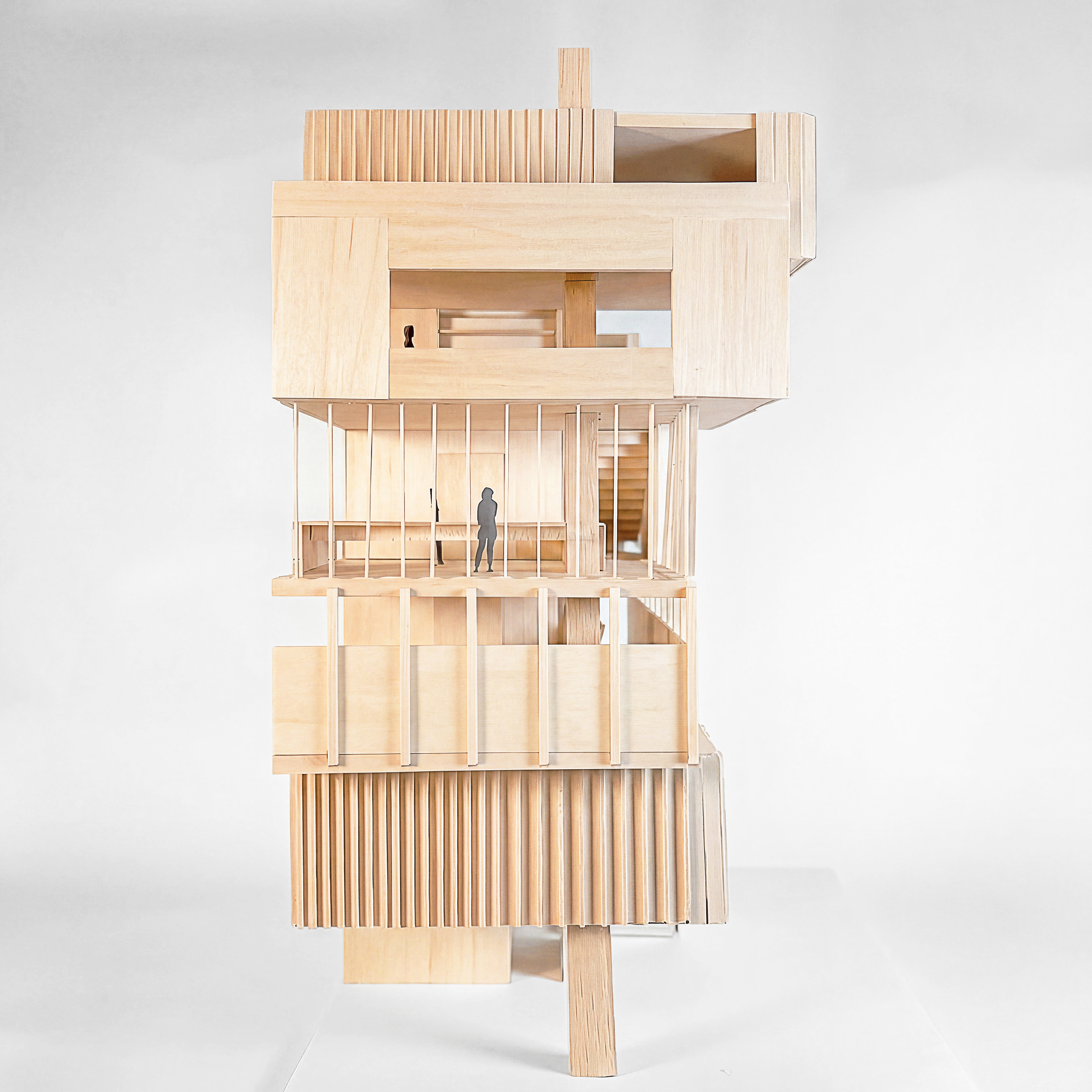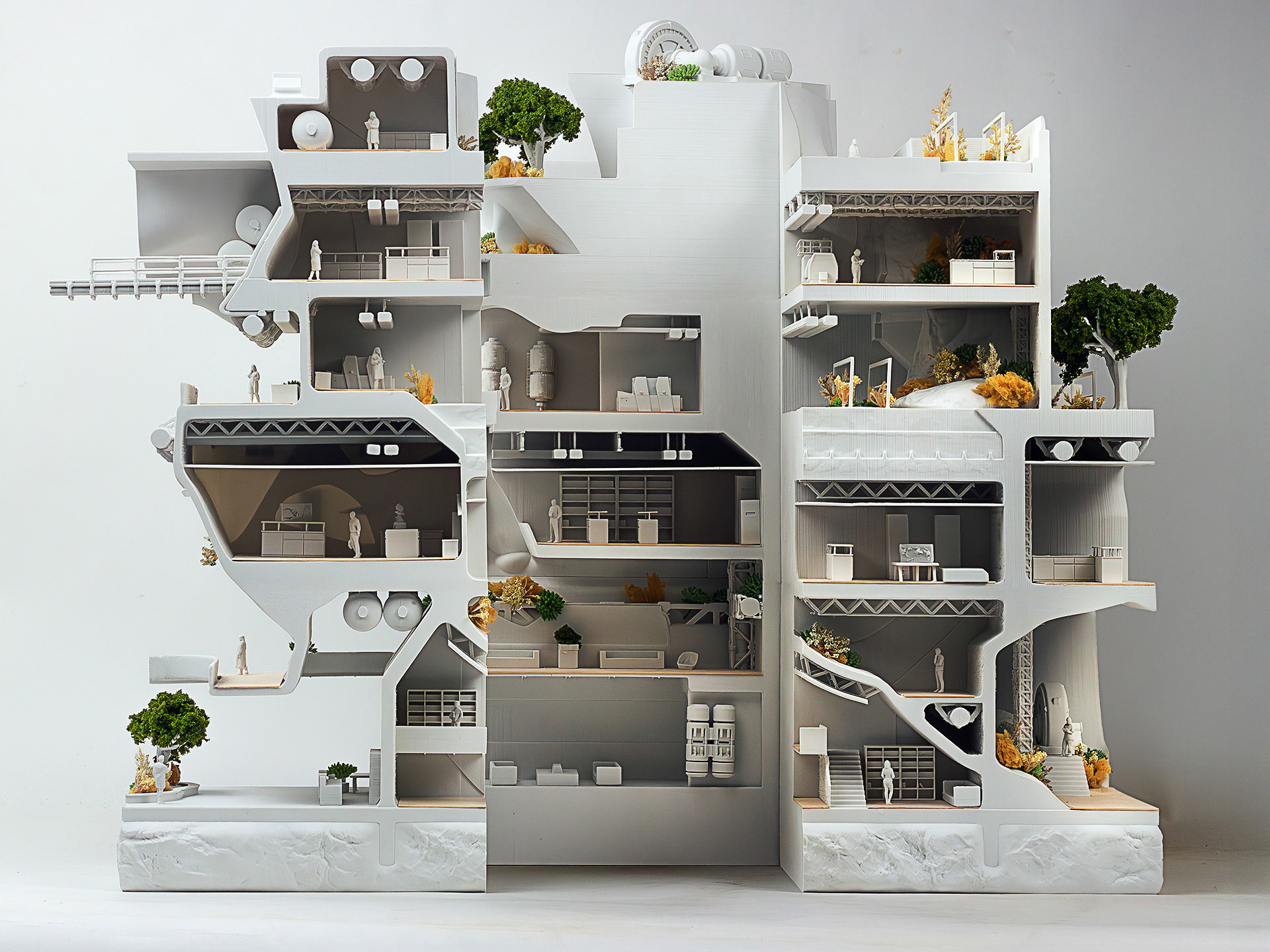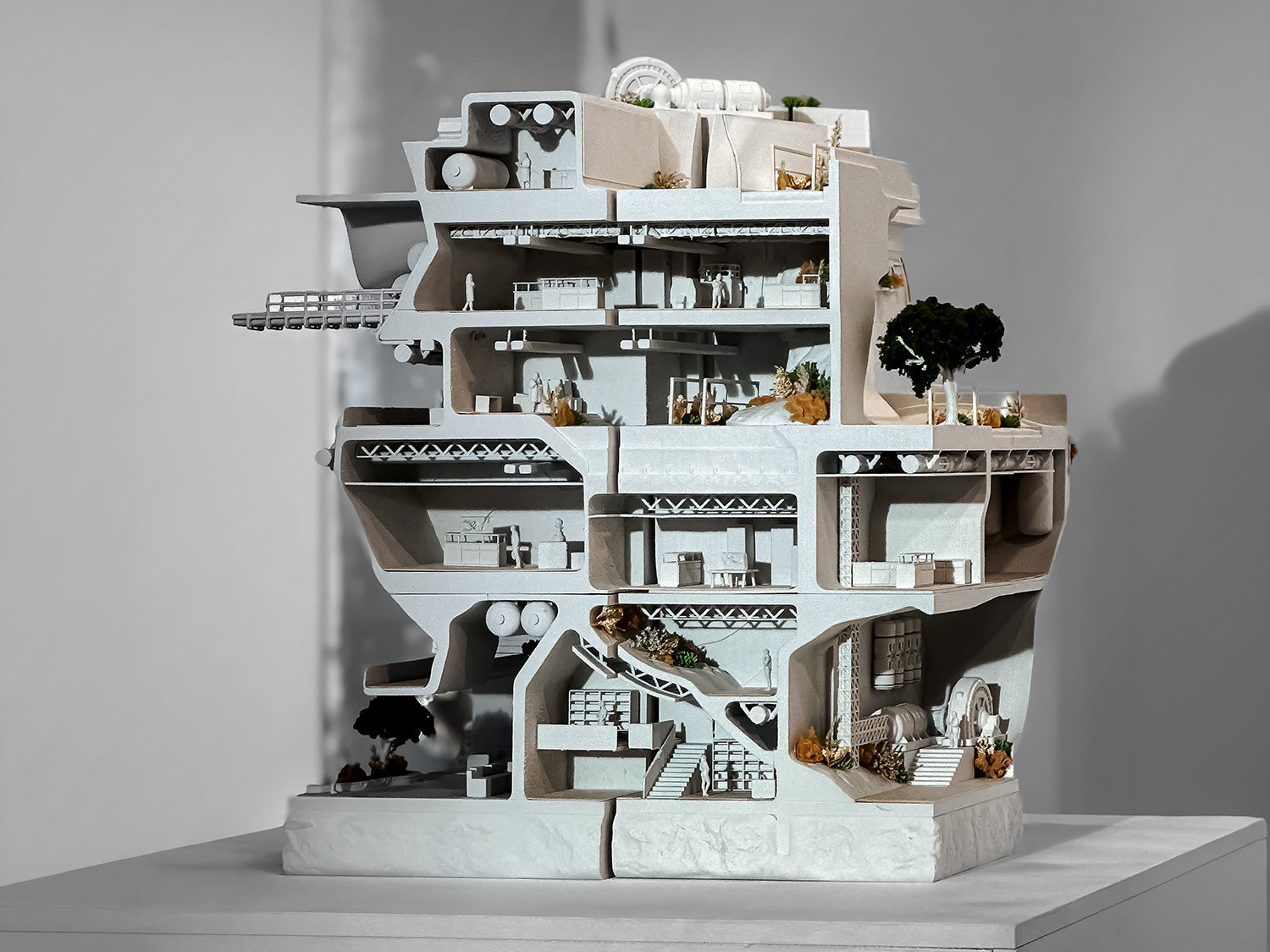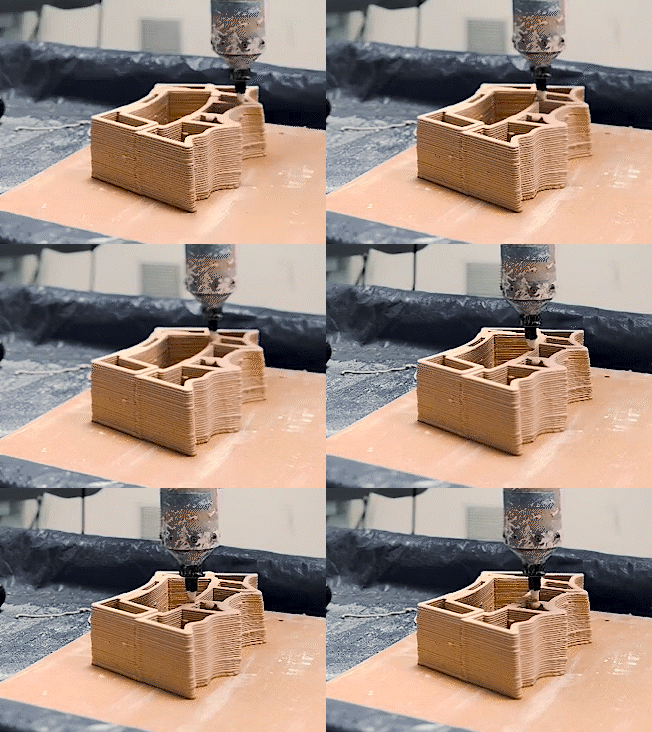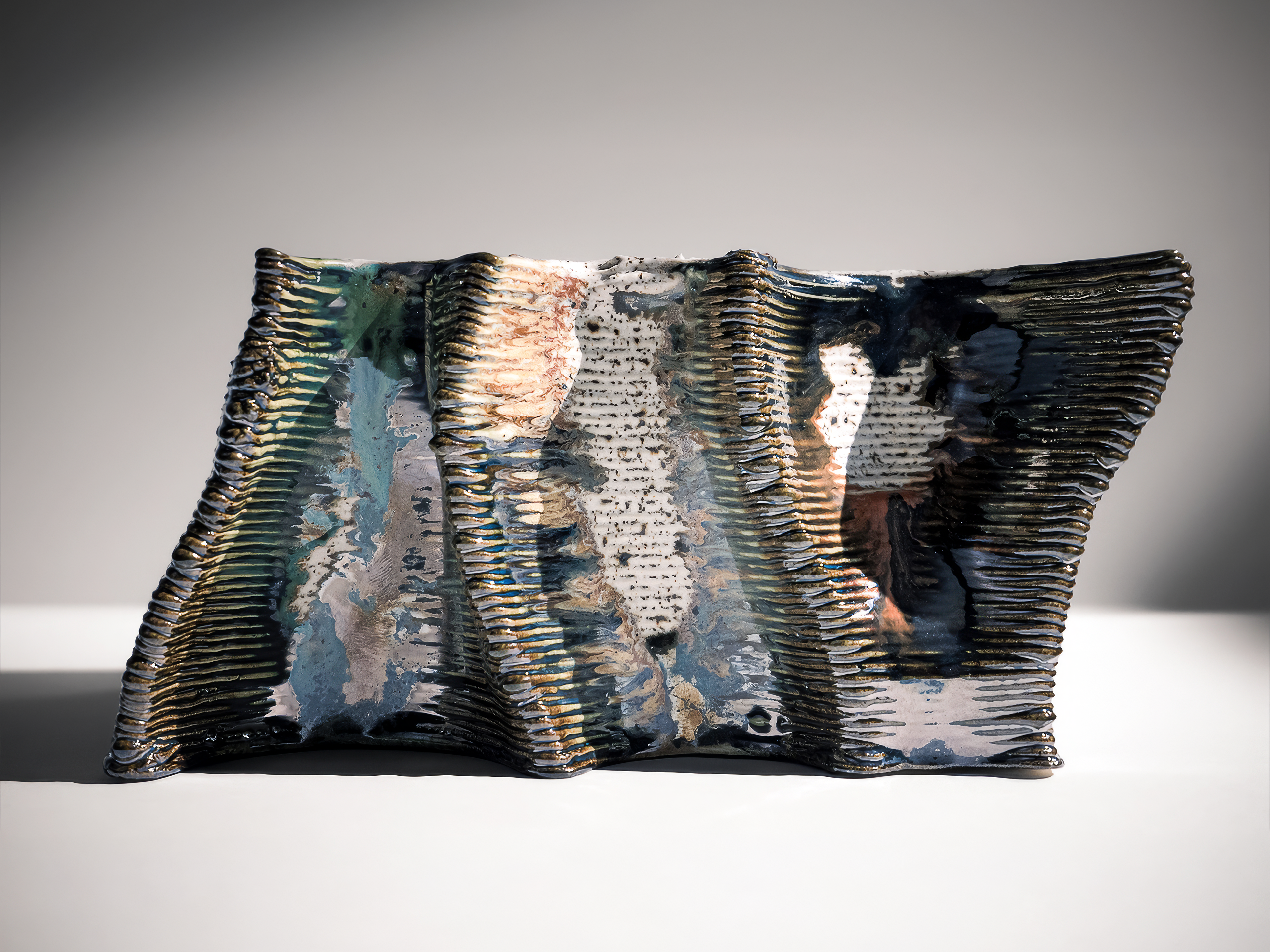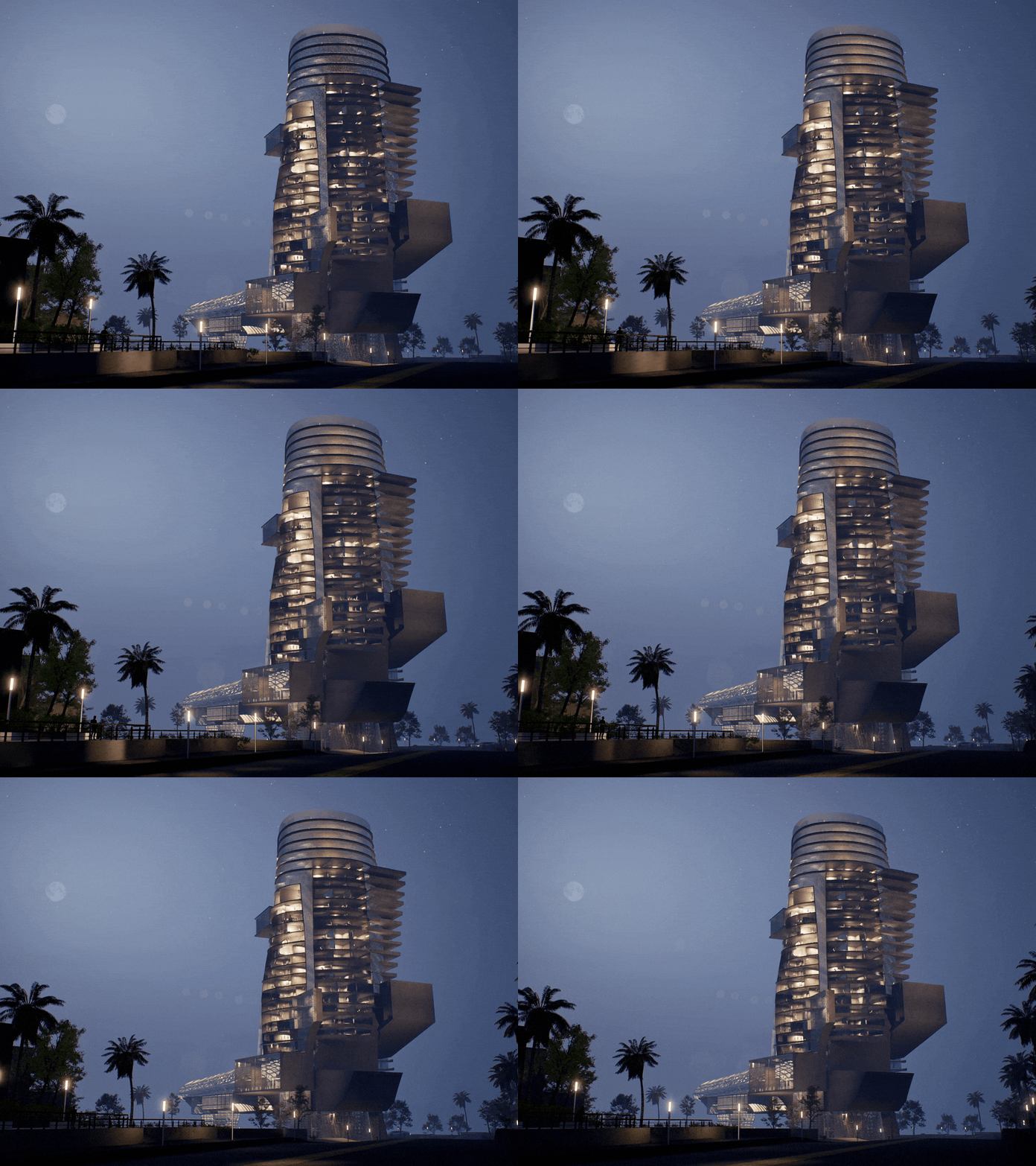
Institute 88 is a speculative design proposal for a research institute at 1647 N La Salle Drive in Chicago, investigating the adaptive reuse of construction waste wood within the city’s urban fabric. The project transforms reclaimed timber into tectonic frameworks reintegrated into the building envelope through a modular system of stacked and offset volumes that promote interaction between research, production, and the public realm. At its core, a fixed structural framework with interchangeable facade systems enables the institute to operate simultaneously as a research facility, material laboratory, and economically sustainable platform for adaptive reuse.
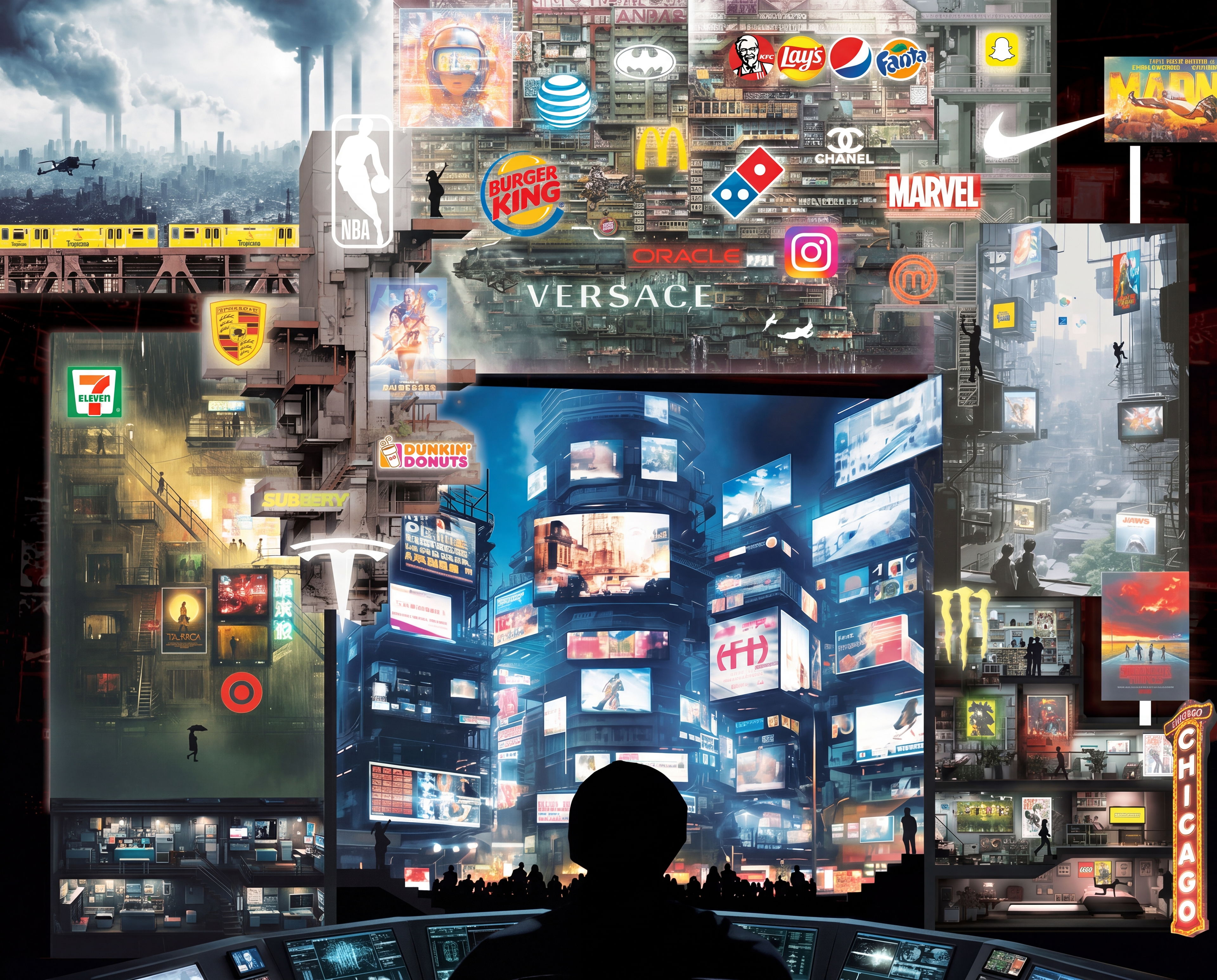
Digital collage reveals a hyper-commercialized dystopian metropolis where corporate media and digital spectacle dominate the urban fabric while construction waste and material excess accumulate beneath the city’s continuous cycle of consumption. Architecture operates as an infrastructural scaffold for branding, surveillance, and economic control, exposing the social and environmental consequences of unchecked urban development and material waste.
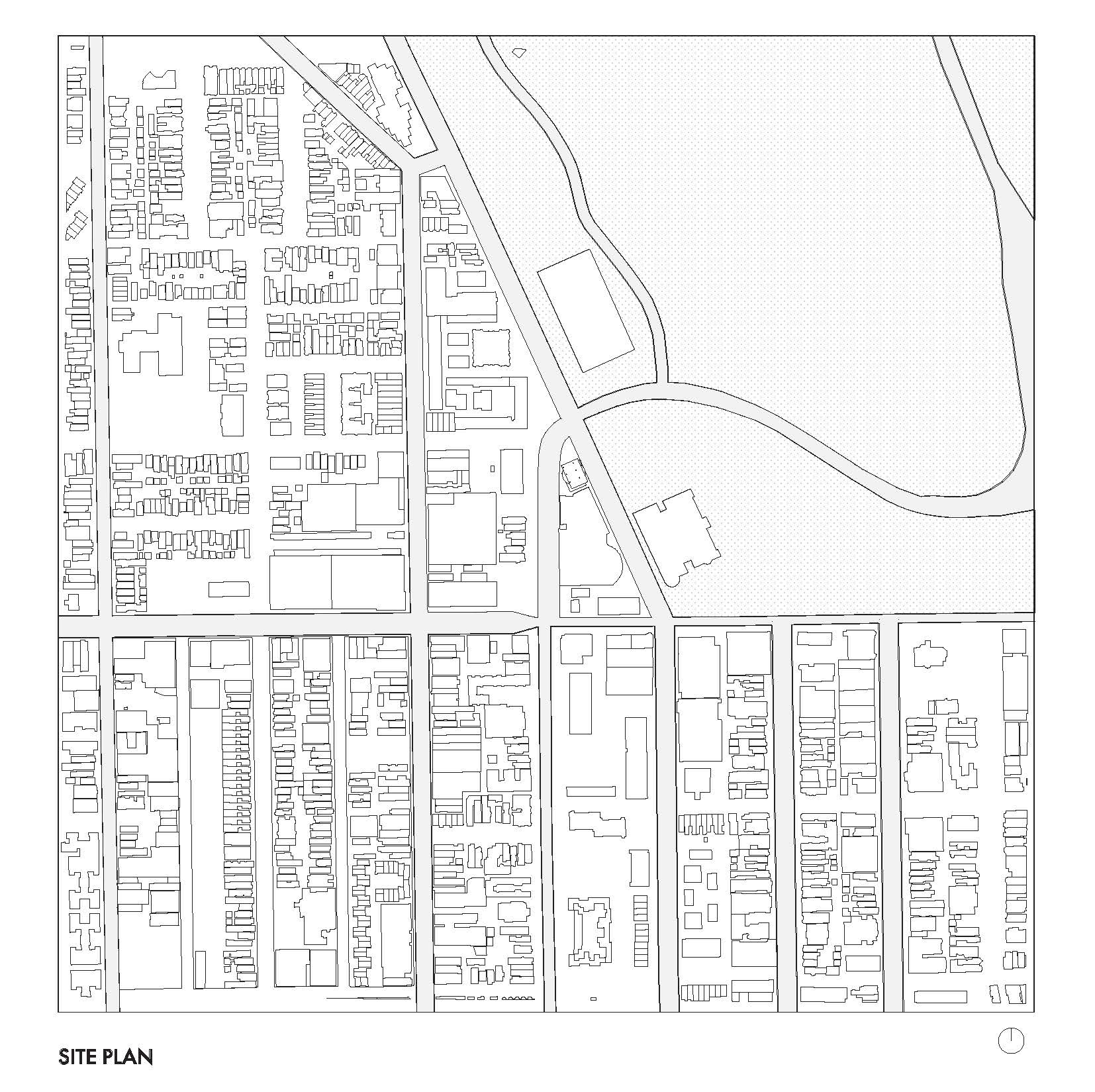
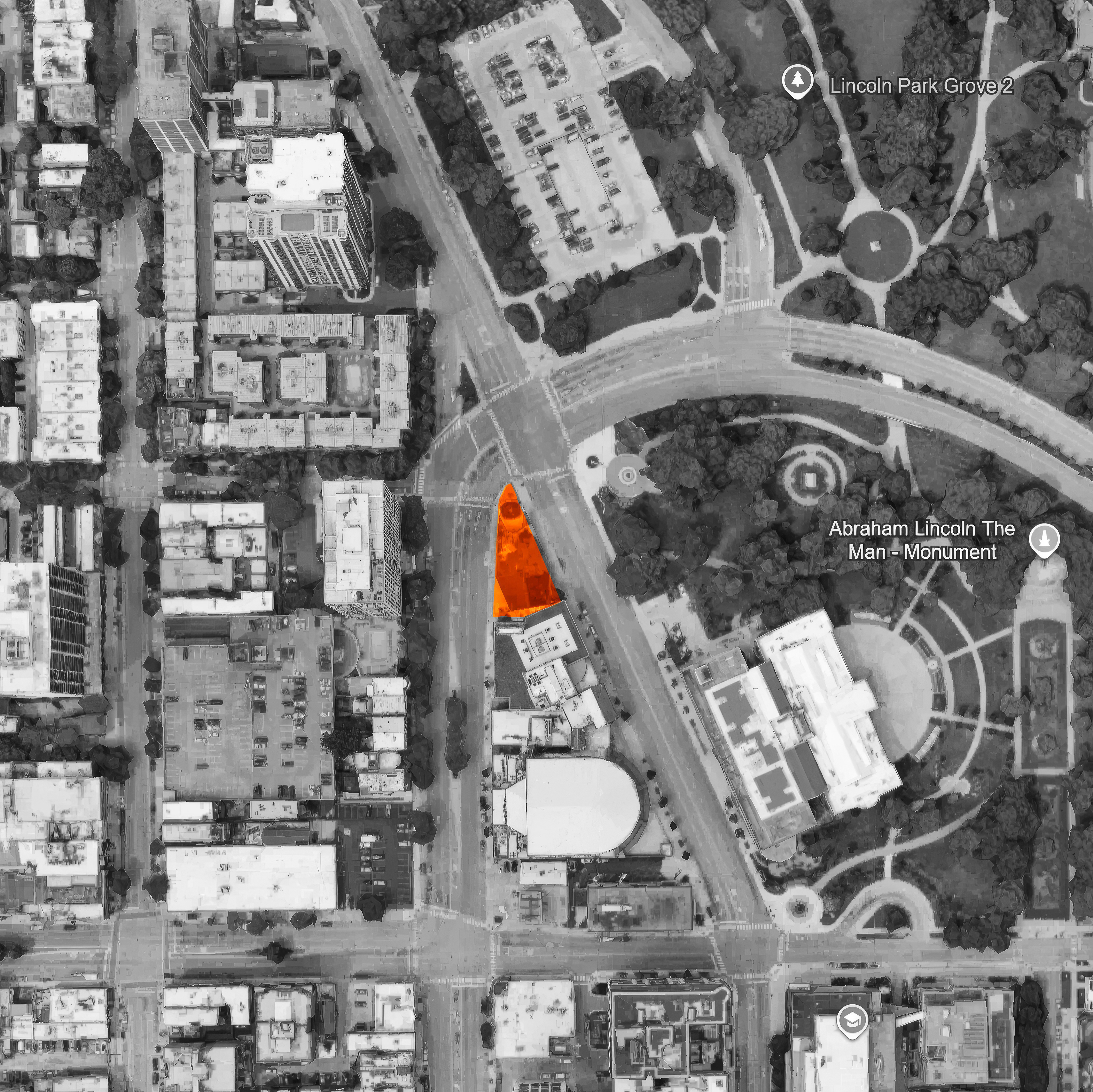
The site at 1647 N La Salle Drive sits at a critical threshold between the dense urban fabric of Lincoln Park and the park's civic landscape. Defined by its triangular geometry and adjacency to major circulation corridors, the site mediates relationships between infrastructure, public space, and the monumental context surrounding the Abraham Lincoln: The Man, positioning it as a strategic point of architectural and urban visibility.
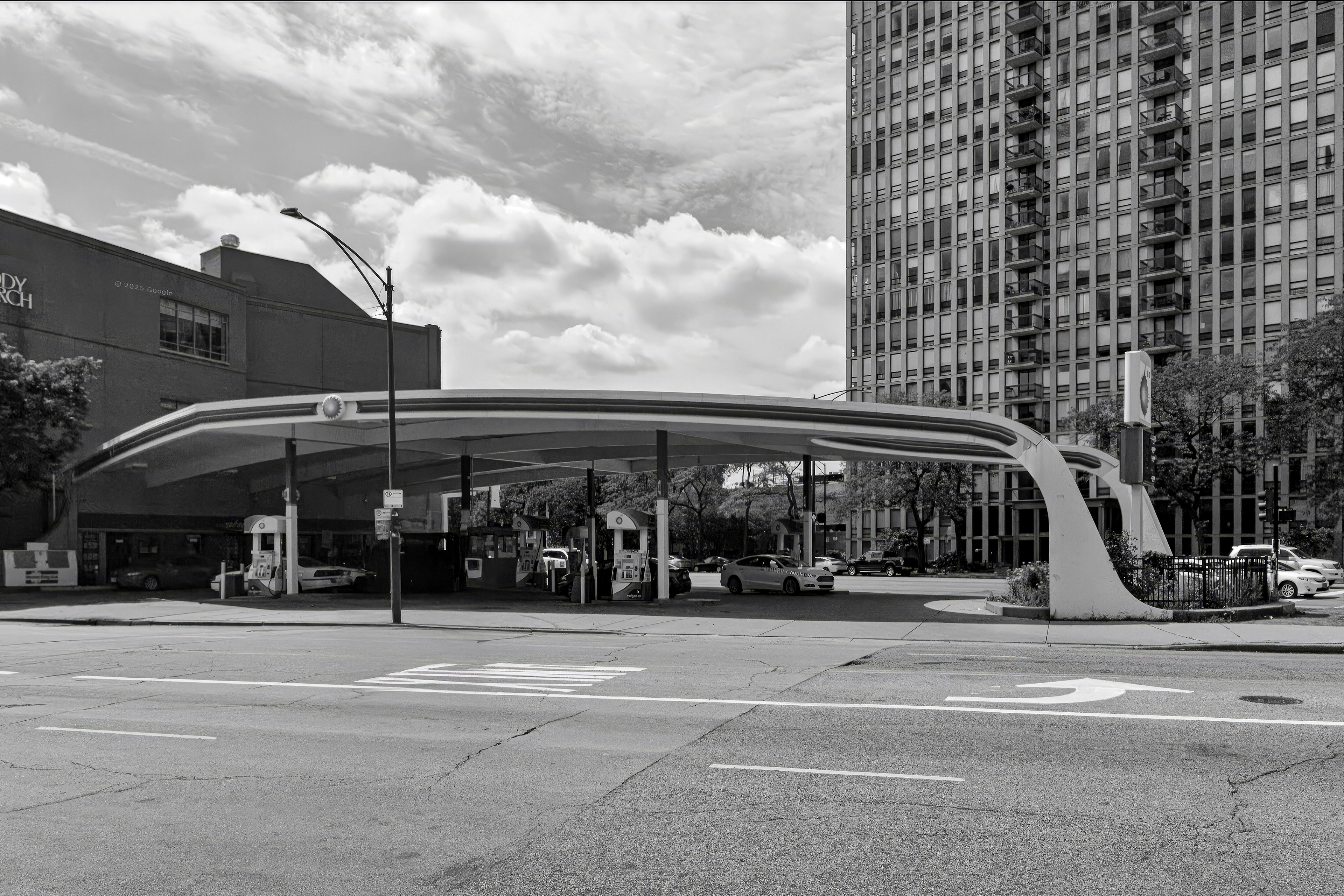
The existing gas station occupies a prominent corner within the dense urban fabric of Chicago, characterized by its expansive canopy structure and proximity to major circulation corridors. Positioned between the residential fabric and the civic landscape of Lincoln Park, the site establishes a distinct infrastructural threshold between mobility systems, public space, and the surrounding urban context.

Fixed Infrastructure

Offset Volumes

Stacked Volumes
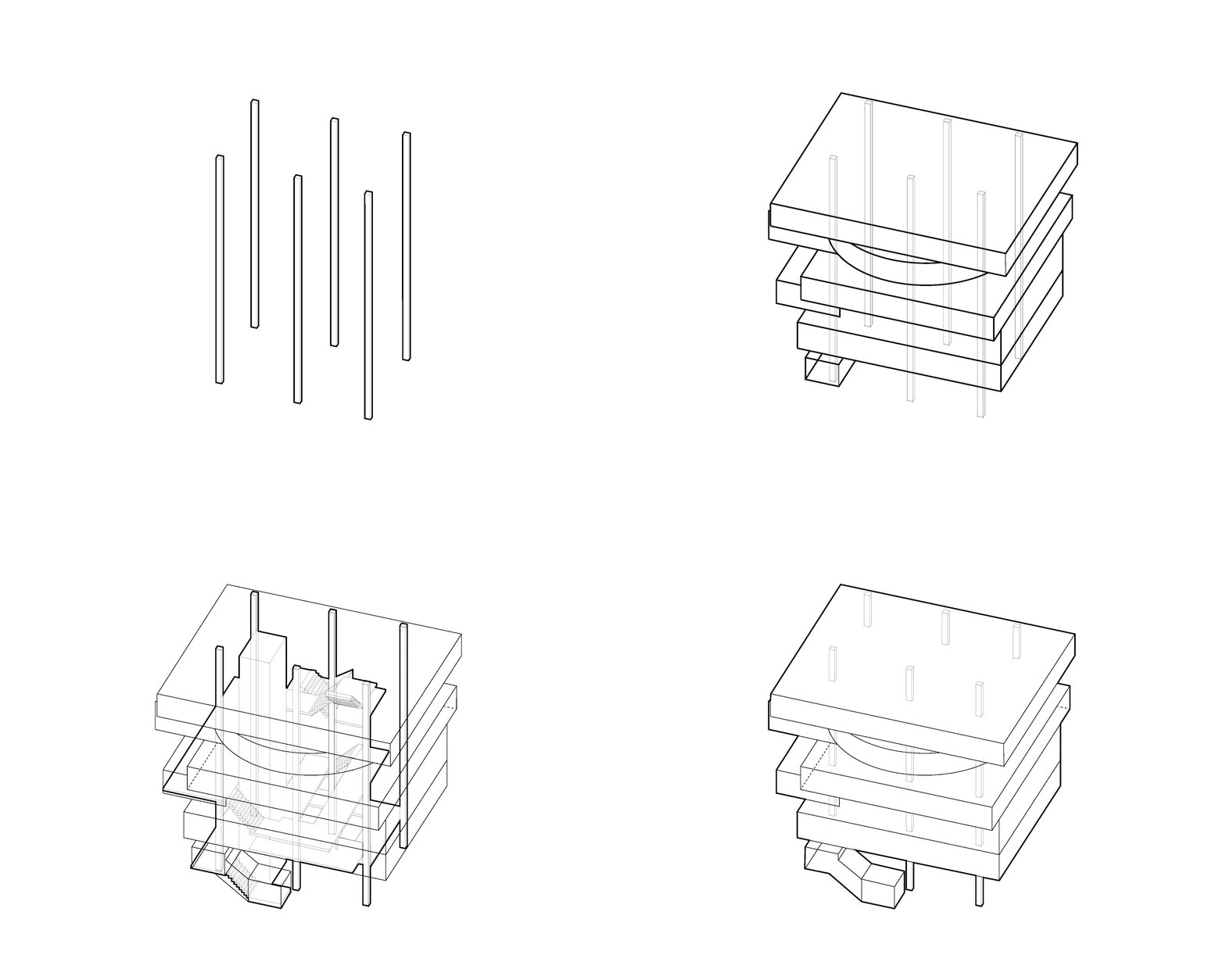
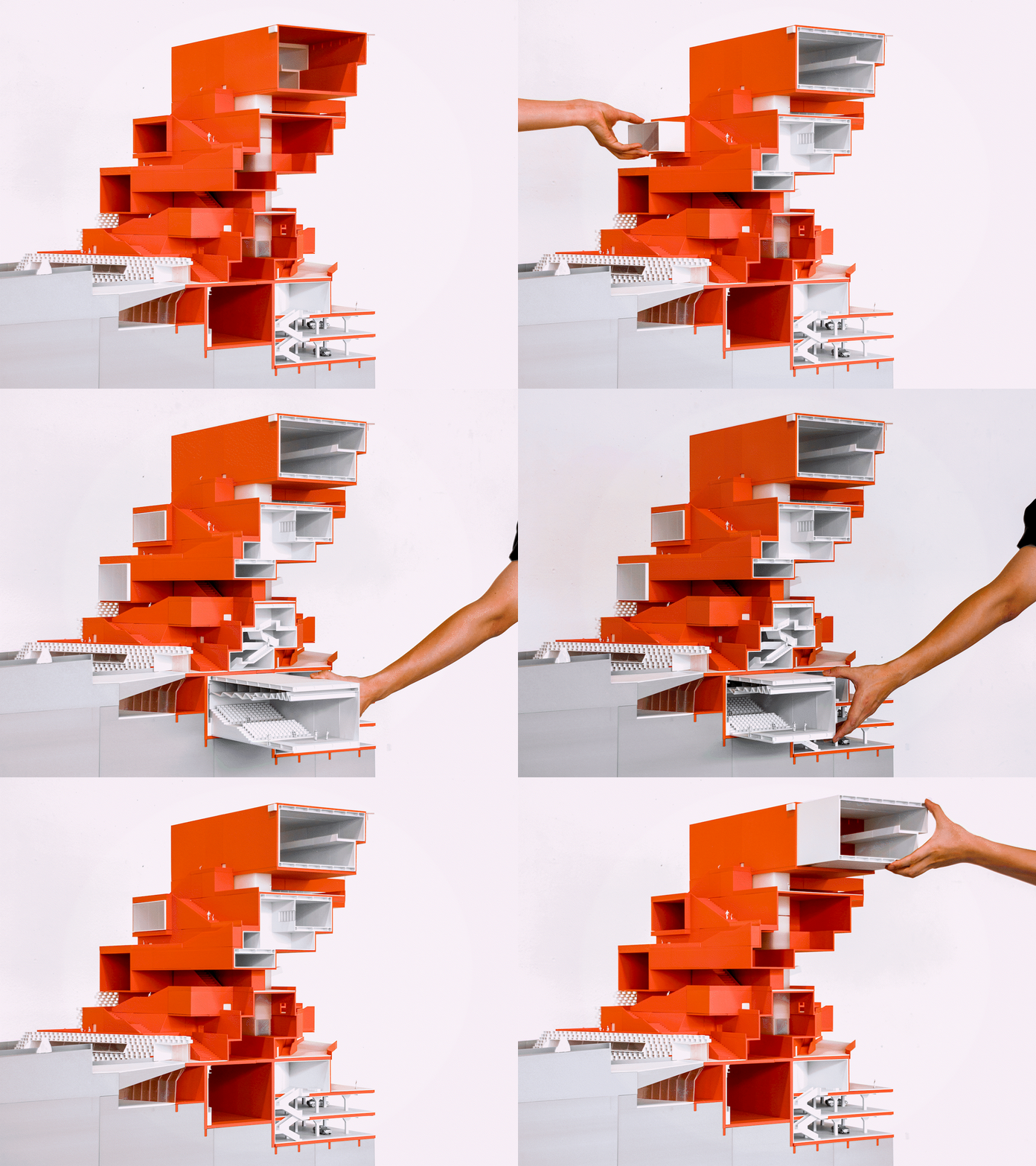
The concept begins with a series of fixed structural infrastructures supporting modular masses that are stacked and offset across multiple axes, extending the building’s spatial relationship toward the surrounding city and the downtown skyline of Chicago. Contained within a rigid brutalist envelope, the interior volumes dissolve conventional room organization to produce continuous and unobstructed spatial fields accommodating collective programs ranging from social spaces to civic gatherings. At the intersections of these volumes, circulation is strategically carved into the outer envelope, linking horizontal movement with vertical programs and establishing a sequential transition between public civic spaces and private exhibition environments.
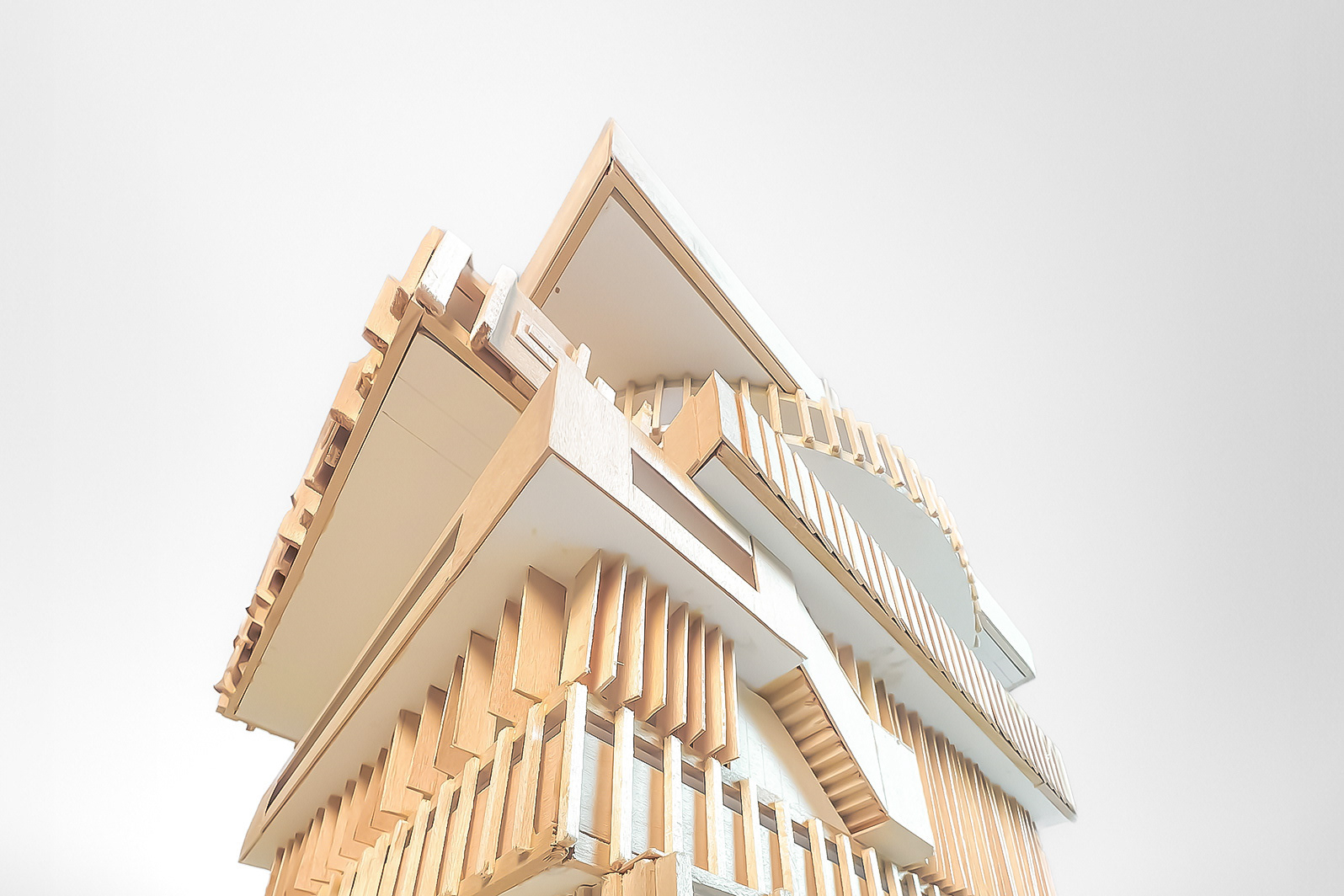
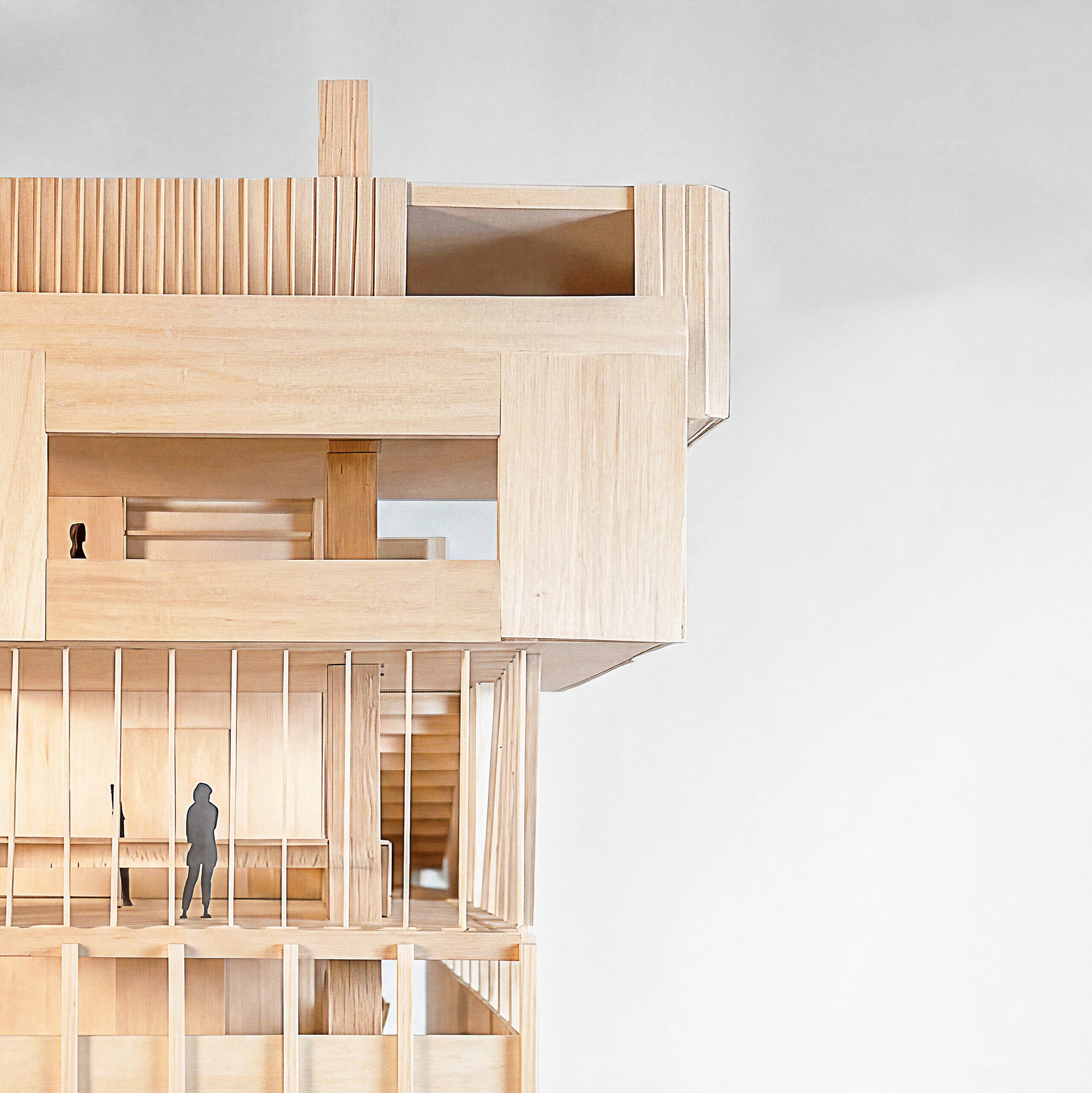
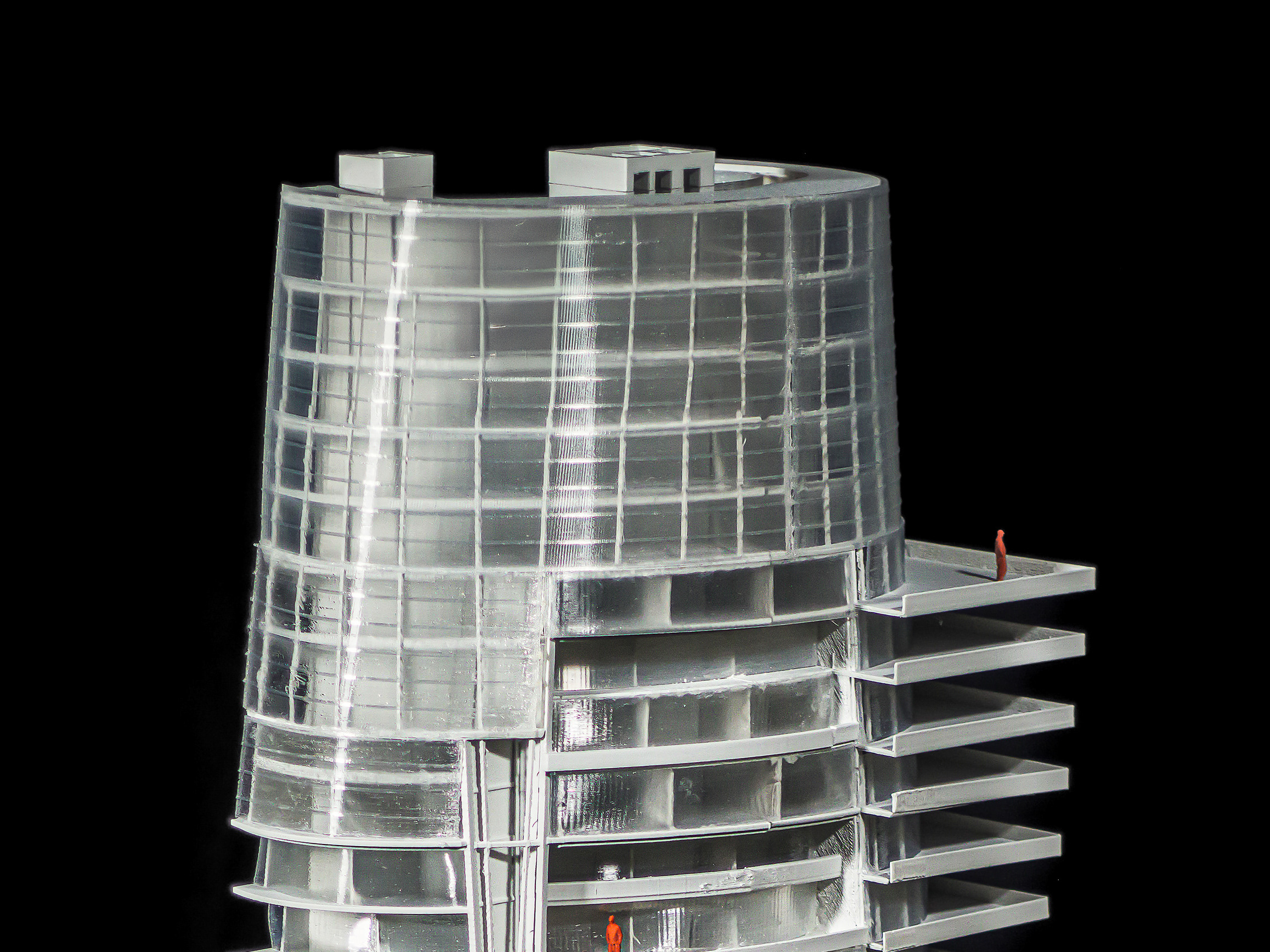
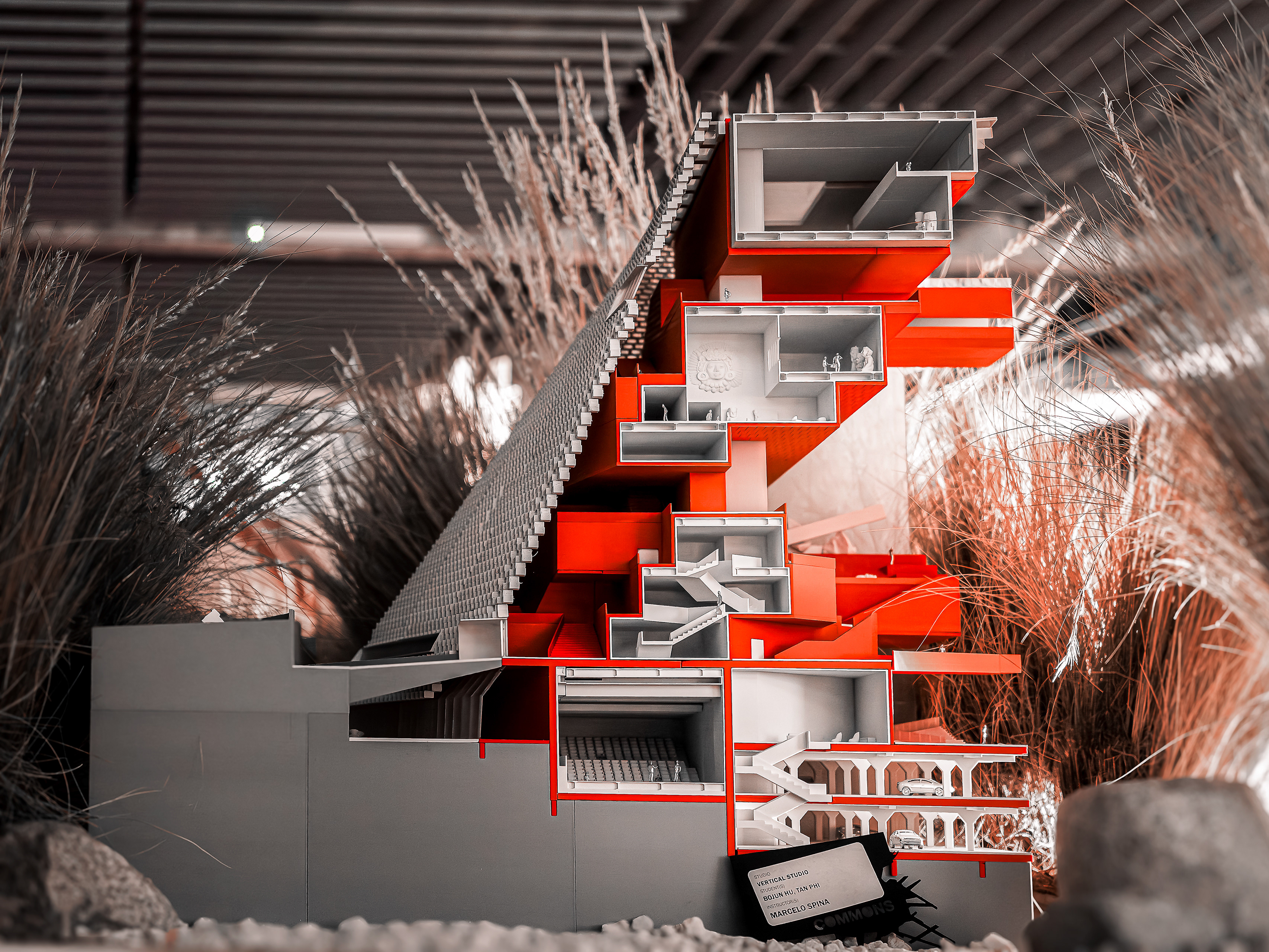
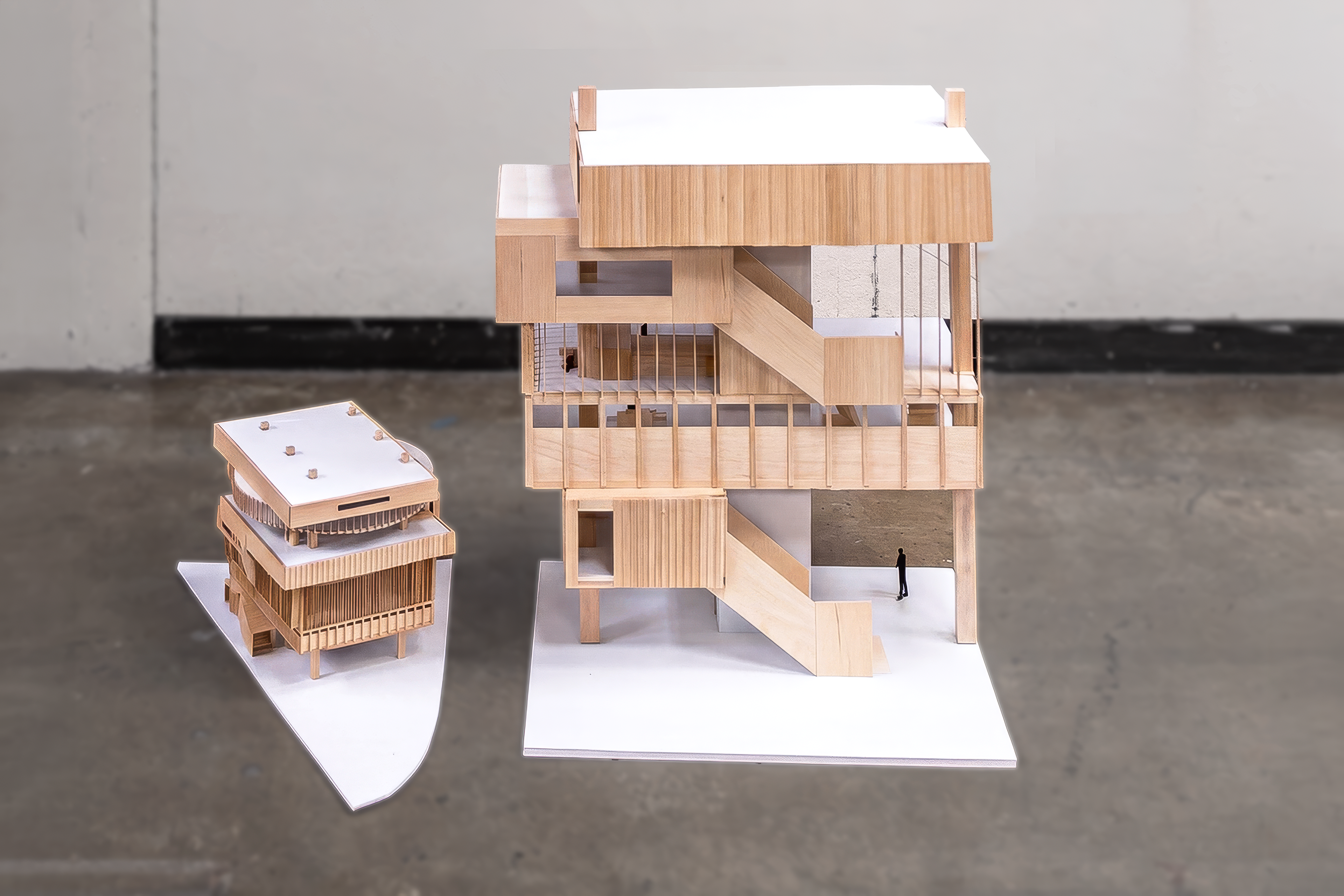
The zoom-in model reveals a stacked and offset tectonic system composed of modular volumes suspended within a rigid structural framework. Layered timber fins articulate the facade as both enclosure and environmental screen, reinforcing relationships between modularity, depth, and structural expression.
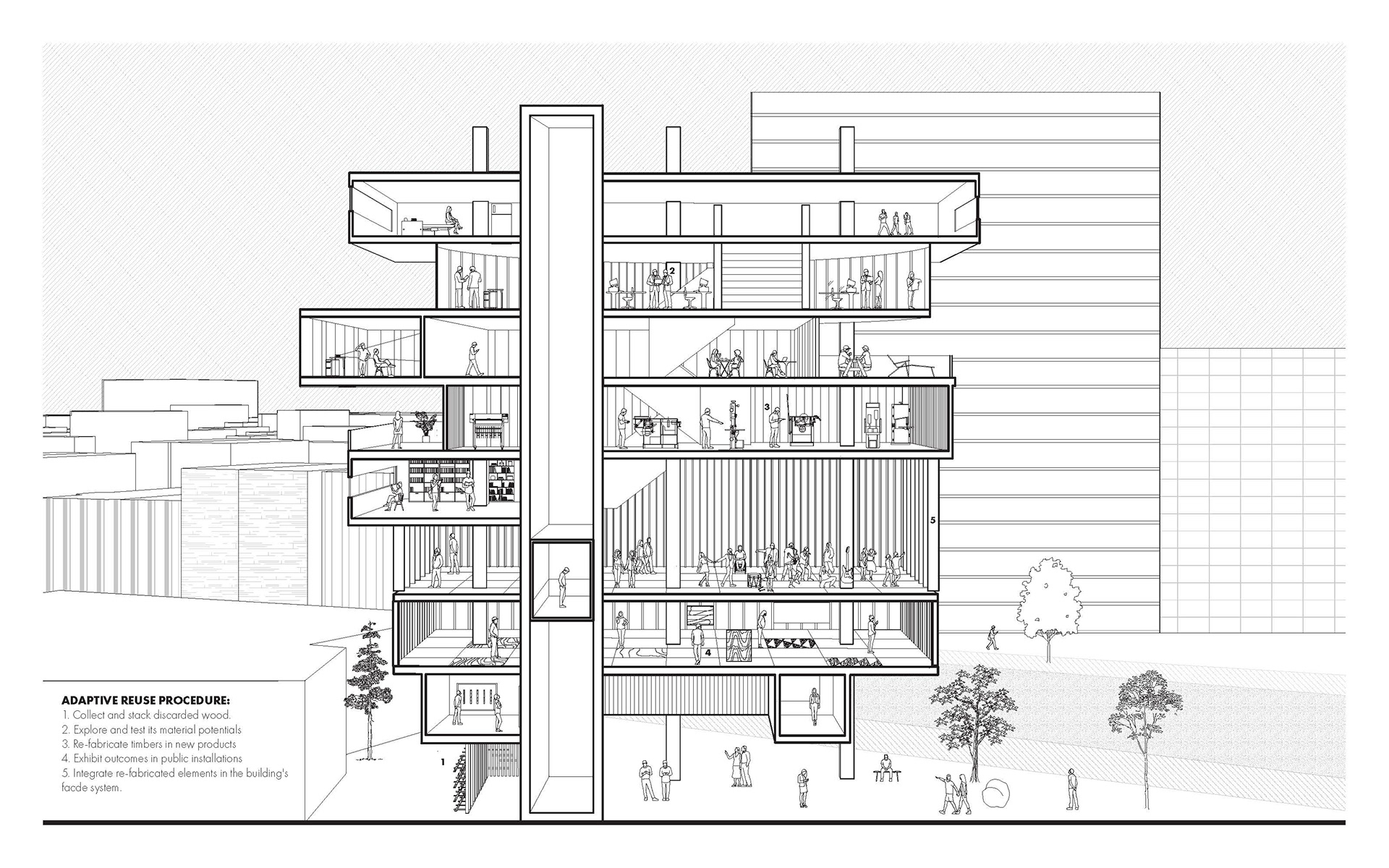
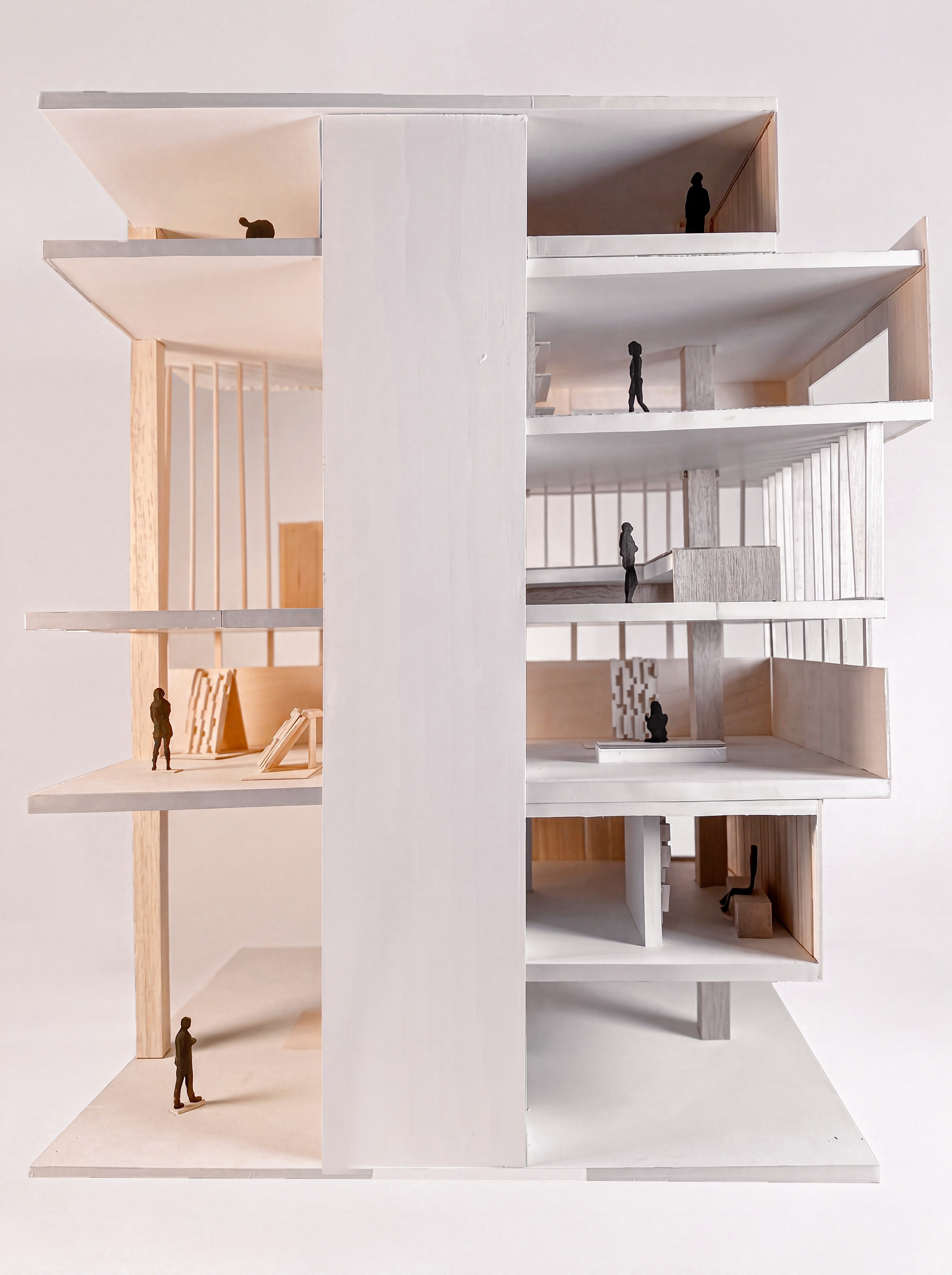
The perspective section reveals a vertically layered organizational system structured around a central circulation core connecting research, fabrication, exhibition, and public programs. Stacked modular volumes extend from the primary structural framework, supporting the adaptive reuse process of collecting discarded wood, testing material potentials, re-fabricating timber products, and reintegrating them into the building’s facade system.